Why the USA Remains the Biggest Market for MLM Businesses And How Software Supports Growth





The United States remains the world’s largest MLM market heading into 2025–2026, generating nearly $34.7 billion in direct selling revenue. With millions of active distributors and a highly advanced digital ecosystem, the U.S. continues to lead global network marketing growth.
However, strict compliance regulations, complex tax systems, and rising distributor expectations make advanced MLM software essential for automation, scalability, and long-term success.
The United States continues to dominate the global network marketing industry, maintaining its position as the world’s largest single-country MLM and direct selling market heading into 2025–2026. According to the latest data released by the Direct Selling Association (DSA) and the World Federation of Direct Selling Associations (WFDSA), the U.S. generated approximately $34.7 billion in retail sales in 2024, remaining the top-performing direct selling economy globally.
Despite global economic uncertainty and post-pandemic market corrections, the American MLM industry continues to show long-term stability.
The latest DSA 2025 Growth & Outlook Study reported:
The U.S. market remains highly resilient because of its mature digital infrastructure, strong entrepreneurial culture, and increasing adoption of AI-driven selling tools, automation platforms, and social commerce.
Globally, the direct selling industry remained close to $164 billion in retail sales in 2024, with the United States ranking as the #1 direct selling market in the world. The WFDSA 2025 report confirmed that the U.S. continues to outperform every individual country in both market size and distributor activity.
While Asia-Pacific collectively contributes a larger regional share, no single nation rivals the American market’s:
The U.S. direct selling ecosystem is powered by approximately 5.4 million active distributors and sellers in 2024. Although the market experienced a correction after pandemic-era hypergrowth, the country still maintains one of the world’s largest independent seller networks.
Today’s distributors increasingly rely on:
This transformation has made the American MLM industry significantly more technology-driven than traditional relationship-selling models of the past.
According to the latest industry breakdown, the leading product and service categories in the U.S. direct selling industry include:
Health, skincare, makeup and lifestyle products continue to dominate because they align naturally with word-of-mouth marketing, community-driven promotion, and personal recommendations.
Industry analysts expect the U.S. MLM and direct selling sector to continue evolving throughout 2025 and 2026 through several major trends.
Artificial intelligence is rapidly transforming how MLM companies operate in the U.S. market. Businesses are increasingly using AI-powered automation to improve customer engagement, predict distributor performance, and simplify repetitive operational tasks.
At the same time, social commerce continues to reshape distributor behavior. Many sellers now rely on short-form content, influencer-driven marketing, and mobile-first selling strategies to attract and retain customers.
Another major trend is the rise of hybrid affiliate-MLM compensation models. These systems combine traditional network marketing structures with affiliate-style commissions, creating more flexible earning opportunities for modern distributors.
The latest WFDSA outlook also suggests that global direct selling is entering a stabilization phase after several years of volatility, positioning the U.S. market for continued long-term influence and innovation leadership.
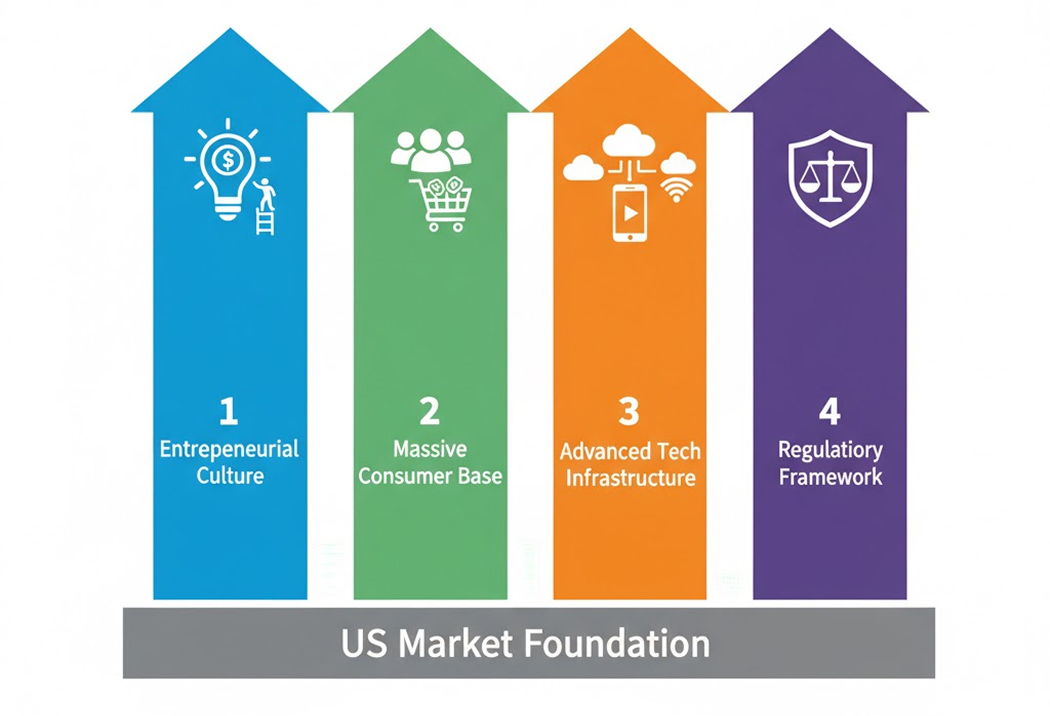
The American Dream has always been tied to independence, ownership, and opportunity. Network marketing fits easily into this cultural DNA. In an era where flexible work and side hustles are mainstream, MLM offers individuals control over their schedules and income potential. MLM Platforms in the USA now integrate gamified elements and video tutorials to help new recruits ramp up faster, increasing engagement and confidence.
The U.S. is a $25 trillion economy with 330 million people, all sharing a common language, currency, and digital infrastructure. This uniformity reduces the friction of expansion. A company can scale nationally without facing multilingual or multicurrency hurdles initially, though Multi-currency and Multi-language support remain crucial for future global expansion.
From Shopify and Magento stores to integrated eCommerce platforms with Woocommerce, American MLM companies use flawless digital commerce. With fast shipping, reliable fulfillment, and integrated eCommerce inventory systems, distributors can manage stock and track orders in real-time. It’s a perfect storm of opportunity, where software integrations make every distributor a self-sufficient entrepreneur.
While some see the FTC’s strict oversight as restrictive, it’s actually a filter for sustainability. Legitimate MLM companies thrive under clear compliance rules that separate them from pyramid schemes. Over time, this builds credibility with consumers and protects the long-term viability of the industry.
The combination of these pillars creates the foundation for America’s continued dominance, but it also highlights why sophisticated software solutions are no longer optional.
Choosing the right MLM software is now one of the most important business decisions for companies operating in the United States. As regulations tighten and distributor expectations increase, businesses need platforms that support automation, compliance, scalability, and real-time operational visibility.
Modern MLM companies should prioritize software that includes:
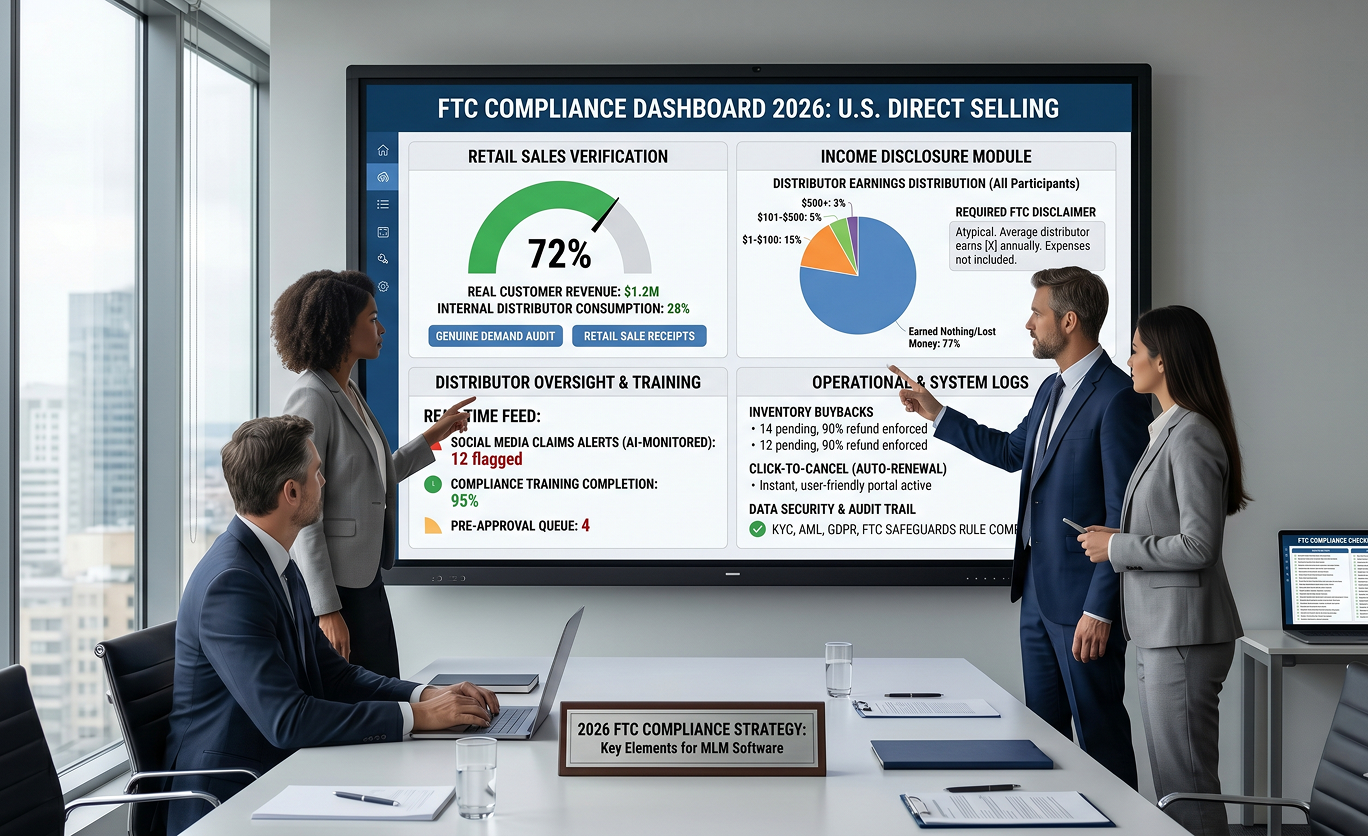
The platform should support FTC-compliant income disclosures, payout transparency, audit logs, and tax documentation management to reduce legal risk.
A reliable automated commission calculator ensures accurate payouts across binary, matrix, unilevel, or hybrid compensation plans without manual processing errors.
Distributors increasingly rely on mobile apps for recruiting, tracking commissions, monitoring genealogy trees, and managing customer interactions remotely.
Leading MLM software should integrate easily with:
As distributor networks grow, software must handle increasing transaction volumes, large genealogy structures, and real-time reporting without performance issues.
Businesses that invest in scalable and compliant software infrastructure are better positioned to sustain long-term growth in the competitive U.S. market.
There are over 10,000 tax jurisdictions across the U.S., each with distinct rates and exemptions. Managing this manually is impossible. Every distributor transaction, whether through a replicated site or a local sale, requires jurisdiction-level accuracy. Without an automated commission calculator or tax integration, even small compliance errors can lead to massive penalties.
U.S. regulators require transparent MLM compensation plans, accurate income disclosures, and proper filing of distributor taxes (W-9, 1099 forms). The binary compensation plan or Hybrid-plan a company adopts must be fully compliant and auditable. Failing to meet these standards risks fines or even shutdown. MLM commission software helps businesses automate payouts, reporting, and document tracking, ensuring every commission and bonus is recorded accurately.
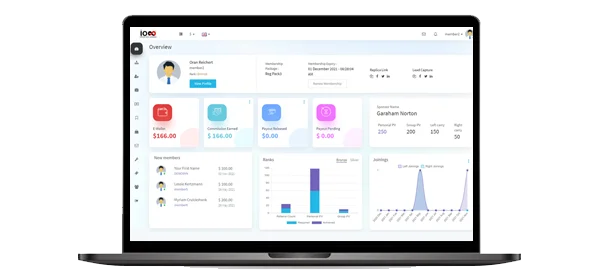
Modern distributors expect digital empowerment, mobile apps , dashboards, replica websites, and instant support. They seek CRM tools and intuitive analytics to track progress, rank progression, and downline growth. If these expectations aren’t met, they’ll switch to competitors that offer a better customer experience.
Find Infinite MLM Software and see how customized automation delivers U.S. market success.
To thrive in the most demanding market, MLM brands need advanced, compliant, and scalable digital tools. This is where platforms like Infinite MLM Software become game changers, uniting technology and compliance to help businesses scale without friction.
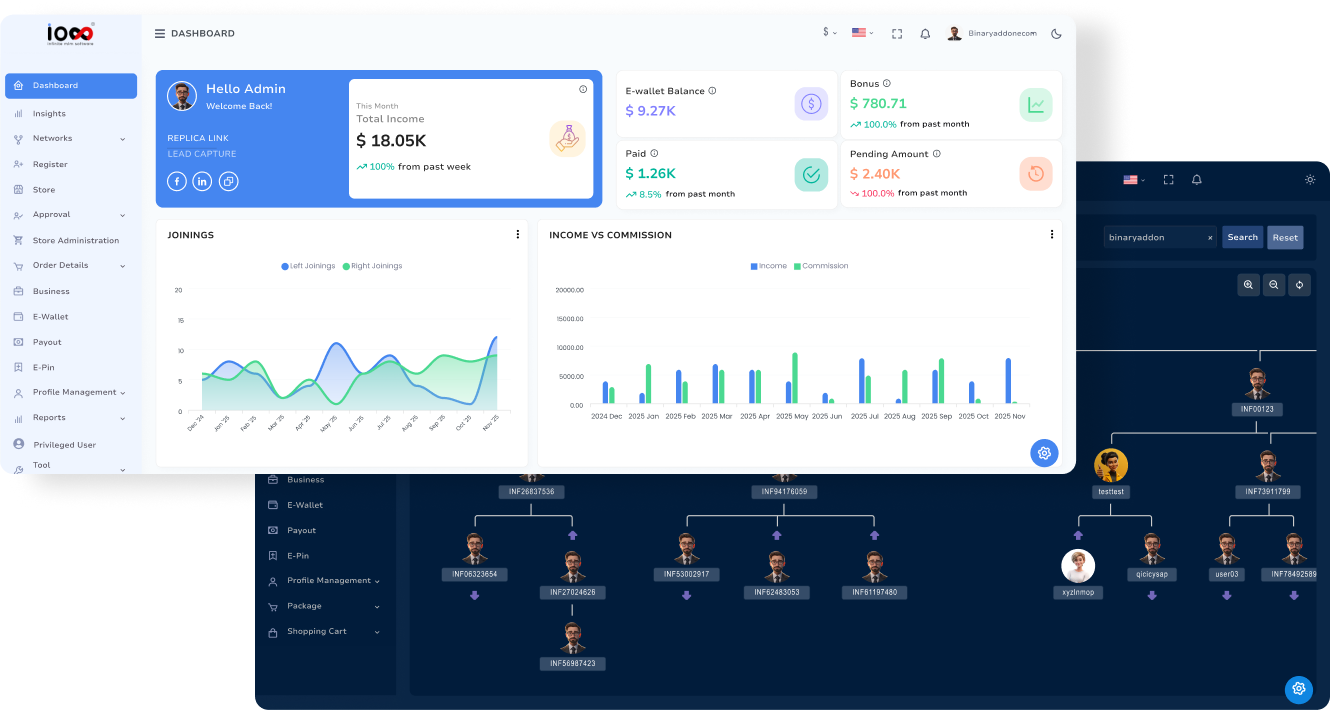
Leading MLM software development platforms include built-in compliance engines. They automate 1099/W-9 generation, align payouts with FTC guidelines, and manage audit trails with precision.
Through integrations with tools like Avalara, modern systems instantly calculate the correct tax rate for each sale. With deep API integration in MLM software, companies avoid manual data entry and reduce errors. Real-time syncing ensures accuracy across every channel, from Shopify checkouts to Woocommerce plug-ins.
A complete U.S.-ready MLM business toolkit includes:
These tools empower every representative to act as an independent digital entrepreneur, fully equipped to sell, recruit, and manage performance.
Our MLM Software supports this entire ecosystem with smooth CRM and Salesforce integration, along with flawless compatibility with popular e-commerce platforms like OpenCart, enabling businesses to scale confidently in the U.S. market and beyond.
Before you choose a platform, make sure you understand the legal side of things. Read our full guide on MLM legality in the USA.
In the U.S. MLM industry, compliance is no longer just a legal requirement, it has become a competitive advantage. Companies that maintain transparent operations, accurate payout systems, and clear distributor disclosures build stronger trust with both regulators and customers.
Modern MLM software helps businesses strengthen compliance through:
Without proper compliance systems, businesses risk payout disputes, distributor dissatisfaction, regulatory penalties, and reputational damage.
As FTC scrutiny increases across the direct selling industry, companies using advanced compliance-focused MLM software are better equipped to scale safely and maintain long-term operational stability.
Modern MLM software reduces operational complexity while helping companies improve accuracy, transparency, and distributor satisfaction.
Before entering or expanding in the U.S., every MLM enterprise should run this simple readiness test. If your platform can’t check all five boxes below, your growth might stall before it starts.
If you answered “No” to any of the above, it’s time to modernize. Today’s competitive network market of 2025 demands tools that align with regulation, user experience, and automation. Platforms like Infinite MLM Software deliver this balance with affordable pricing models, reliable uptime, and robust data security measures to eliminate data migration or integrity issues.
Check Affordable MLM Software and start scaling and gain more profit.
The U.S. MLM landscape is the biggest stage; filled with opportunity, complexity, and innovation. Its scale is unmatched, but so are its expectations. The only sustainable way to compete here is to combine great products with powerful technology.
From automating MLM operations to enhancing distributor engagement through AI chatbot integration, today’s MLM features redefine what success looks like. The future belongs to companies that embrace compliance, technology, and automation, not just as tools, but as the engines of trust and growth.
The U.S. leads the MLM world due to its entrepreneurial culture, technological adoption, and established regulatory framework. High consumer confidence, digital readiness, and flexible earning structures make it a fertile ground for both startups and established network marketing giants.
Modern platforms, such as Binary MLM software, automate commissions, improve distributor tracking, and enable transparency across large teams. They minimize manual errors and simplify business processes, helping companies scale without losing efficiency.
Compliance ensures trust and longevity. The FTC mandates clear communication, transparent income disclosures, and ethical compensation plans. Advanced direct selling software helps businesses stay compliant by tracking every transaction and ensuring fair payouts.
By embracing automation, mobile accessibility, and data-driven insights. Tools like automated commission calculators enable real-time accuracy, allowing companies to motivate distributors and ensure consistent growth through reliable compensation models.
Yes. Mobile adoption is now a must-have for distributors who work remotely or manage field operations. Mobile MLM software provides access to dashboards, earnings, and recruitment tools on the go, ensuring flexibility and faster communication.
An integrated MLM e-wallet simplifies fund transfers, bonus distribution, and withdrawal requests. It also provides a secure, paperless payment ecosystem, making it easier for companies to handle multi-tiered commissions digitally.
Essential tools include sales tracking, MLM software integration, CRM, analytics, and secure payment modules. These features enable companies to maintain performance visibility while ensuring a smooth experience for both administrators and distributors.
Artificial intelligence, blockchain validation, and machine learning-based analytics will define the future trends of MLM. Platforms with customized MLM plans and predictive tools will dominate, enabling smarter decisions, transparent payments, and data-driven recruitment.
Co-founder and Chief Marketing Officer at iOSS


 May 29, 2026