
Direct Selling in Mexico: Market Size, Regulations, and Expansion Guide for Foreign Operators



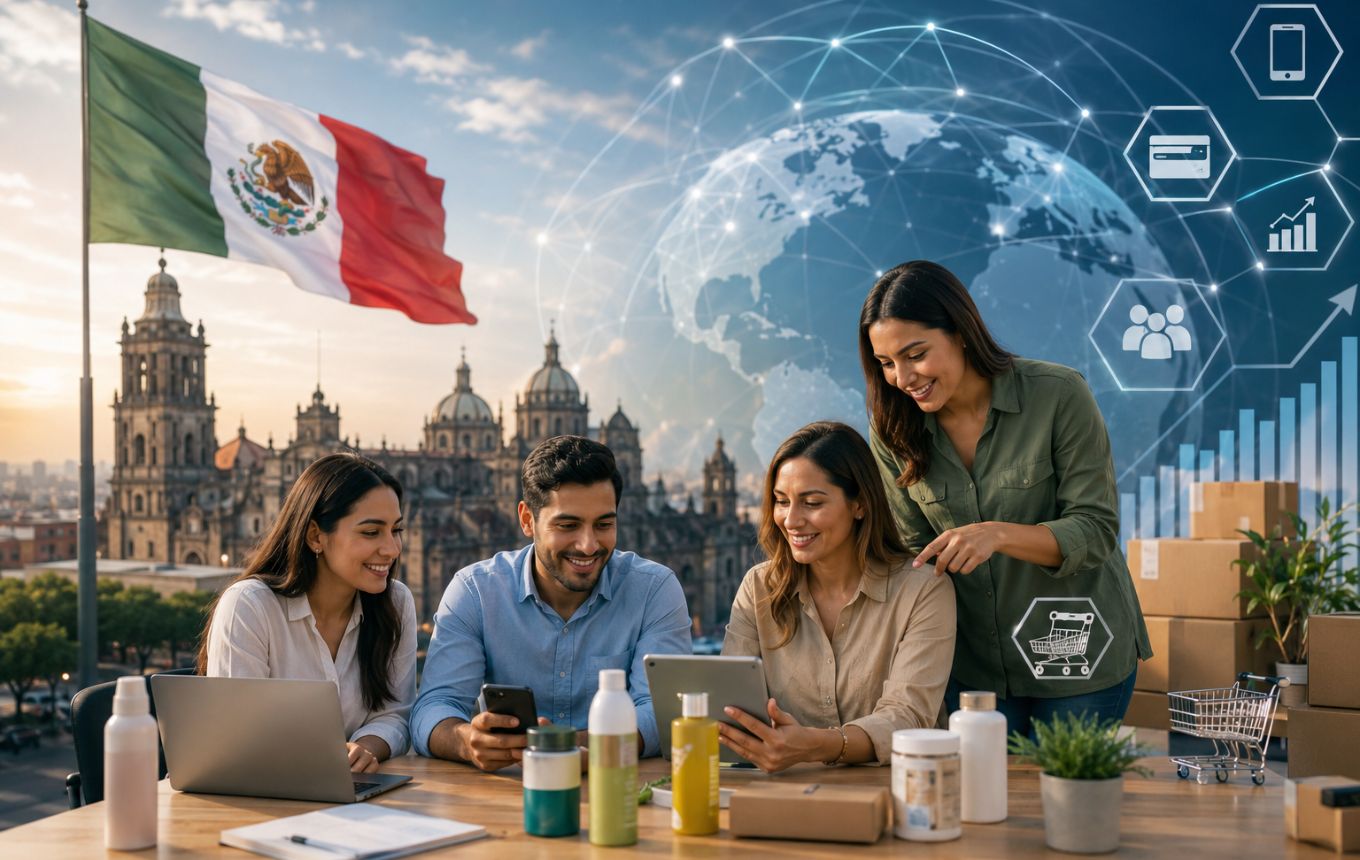

Mexico is one of the world’s fastest-growing direct selling markets, generating approximately $6.8 billion in annual retail sales and ranking 8th globally. With 3.7 million active distributors, strong mobile adoption, and a community-driven sales culture, the country offers major opportunities for foreign operators.
To succeed in this market, businesses need compliant operations, local payment integration, and scalable MLM software that supports CFDI invoicing, multilingual management, and mobile-first distributor networks.
Mexico continues to grow as one of Latin America’s strongest direct selling markets. Its large distributor base and mobile-first selling culture make it highly attractive for international MLM companies.
Mexico occupies a unique position in the global direct selling ecosystem. It combines the scale of a mature market with the growth potential of an emerging digital economy. According to the latest data published by the World Federation of Direct Selling Associations, Mexico accounts for roughly 4% of total global direct selling sales.
| Market Indicator | Mexico Direct Selling Data |
|---|---|
| Annual Retail Sales | $6.8 Billion USD |
| Global Ranking | #8 Worldwide |
| Latin America Ranking | #2 Behind Brazil |
| Active Participants | 3.7 Million |
| Female Distributor Share | 73% |
| Market Penetration | 0.369% |
| Share of Global Direct Selling Sales | 4% |
Mexico’s 0.369% direct selling penetration rate places it among WFDSA’s higher-penetration markets, proving that the industry is already commercially strong while still offering room for expansion. Unlike highly saturated regions such as the United States, Mexico continues to provide opportunities for growth across multiple product categories and business models.
Women account for nearly three-quarters of Mexico’s direct selling workforce, heavily influencing purchasing trends in the market. As a result, health supplements, skincare, cosmetics, wellness products, and household goods remain the strongest-performing categories due to their alignment with relationship-based and community-driven selling.
Mexico showed stronger resilience than several North American markets during recent industry slowdowns. A growing middle class, increasing demand for flexible income opportunities, and low startup barriers made direct selling an attractive option for many individuals seeking additional income streams.
The rapid adoption of mobile internet and social platforms significantly accelerated distributor growth in Mexico. Platforms such as WhatsApp, Facebook, Instagram, and short-form video apps enabled distributors to recruit, market products, and build customer communities more efficiently than traditional offline models.
Mexico’s purchasing culture strongly favours referrals, family recommendations, and community trust. This naturally supports party-plan selling, team-based business structures, and relationship-focused network marketing models, making the market highly receptive to direct selling businesses.
Health and wellness remains the largest direct selling category across Mexico and Latin America overall. Nutritional supplements, immunity products, meal replacement programs, fitness support products, and weight management systems consistently generate strong demand.
Cosmetics and personal care products remain a close second. Female-led distributor networks, combined with highly social product demonstration models, continue to drive growth for skincare, makeup, fragrance, and beauty brands.
Other major product segments include:
Household cleaning solutions and home maintenance products remain consistently popular through community-based distribution channels.
Vitamins, minerals, and dietary supplements continue to grow as health awareness increases among Mexican consumers.
Wellness-focused lifestyle products including fitness equipment, essential oils, and holistic health solutions maintain strong demand.
Educational memberships, digital courses, and personal development products are emerging as high-growth categories in the market.
Companies that combine recurring-consumption products with strong community engagement typically perform best in the Mexican market.
Several globally recognised direct selling brands already maintain strong operations within Mexico, demonstrating the market’s maturity and long-term viability.
Notable companies include:
One of the world’s largest direct selling companies with a well-established presence across Mexico’s health, beauty, and home care segments.
A dominant force in Mexico’s nutrition and weight management market, with deep distributor penetration across the country.
A legacy beauty and personal care brand with one of the largest female distributor networks in the Mexican market.
A leading Brazilian cosmetics brand that has expanded successfully into Mexico through its community-driven selling model.
A Mexico-based nutritional products company with strong regional recognition and a loyal distributor base across Latin America.
Particularly notable because it trades publicly on Nasdaq under the ticker BWMX. Its public market presence reinforces the legitimacy and commercial maturity of Mexico’s direct selling ecosystem.
Mexico has a structured legal framework for direct selling and MLM businesses. Foreign companies must comply with consumer protection laws, tax regulations, and digital invoicing requirements before launching operations.
PROFECO regulates consumer-facing direct selling activities in Mexico and ensures that MLM companies operate with transparency and fair business practices.
Companies must ensure:
All earnings claims and income representations must be accurate, verifiable, and presented transparently to prospective distributors.
Companies must provide clear refund procedures and buyback options for unsold inventory to protect distributor interests.
All distributor contracts must clearly outline terms, obligations, compensation rules, and termination conditions.
Product descriptions and promotional materials must be truthful and not misleading to consumers or potential distributors.
Companies must maintain accessible and responsive complaint resolution processes in compliance with PROFECO standards.
Failure to comply with PROFECO regulations can result in penalties, legal disputes, and reputational damage for direct selling companies.
SAT requires businesses to generate CFDI digital invoices for product sales, distributor purchases, and commission payouts.
Key requirements include:
All businesses operating in Mexico must obtain a valid RFC tax identification number from SAT before conducting commercial activities.
Every product transaction and commission payout requires a SAT-compliant CFDI digital invoice with proper tax data and formatting.
Businesses must correctly apply, calculate, and report IVA (value-added tax) on all applicable transactions.
Income tax (ISR) must be properly withheld from distributor commission payments and reported to SAT.
Accurate and complete financial records must be maintained to support tax filings, audits, and regulatory compliance.
Automated MLM software helps businesses efficiently manage invoicing, tax calculations, commission calculation, and financial compliance requirements.
AMVD promotes ethical selling practices and professional industry standards within Mexico’s direct selling sector.
Membership helps businesses improve:
AMVD membership signals industry credibility and helps build stronger trust with existing and prospective distributors.
Association with recognized industry standards strengthens a company’s competitive positioning in the Mexican market.
AMVD guidelines promote responsible recruiting methods that protect both companies and individual distributors.
Following AMVD standards helps ensure that business operations remain open, accountable, and compliant with industry norms.
AMVD-aligned businesses maintain higher consumer protection levels, reducing dispute risk and regulatory exposure.
Many established direct selling companies follow AMVD guidelines to strengthen long-term business sustainability.
Mexico allows MLM businesses as long as compensation is primarily based on product sales rather than recruitment fees or inventory-loading practices.
Businesses should maintain:
Commission structures must be clearly documented and accessible to all distributors to ensure full transparency.
Revenue generation must be driven primarily by genuine product sales to end consumers, not internal distributor purchases.
Income representations must reflect actual distributor earnings and avoid exaggerated or misleading claims.
Recruitment processes must be fair, transparent, and free of high-pressure tactics or mandatory inventory purchases.
Compensation must be tied directly to verifiable product sales rather than recruitment activity alone.
Companies that prioritize genuine product sales and customer acquisition are more likely to maintain regulatory compliance and long-term market stability.
Efficient payment systems are essential for MLM businesses in Mexico. Companies must support local payment methods, transparent payouts, and proper tax compliance to maintain distributor trust and operational stability.
Foreign operators frequently underestimate the importance of local payment infrastructure when launching in Mexico. Distributor recruitment may succeed initially, but payout friction often causes retention problems later.
Several payment systems dominate Mexico’s financial ecosystem:
Mercado Pago is one of Latin America’s most widely adopted digital wallet and payment processing systems. Many distributors expect to receive payouts through Mercado Pago because it offers accessibility, mobile convenience, and regional familiarity.
Banco de Mexico introduced CoDi (Cobro Digital) as a real-time digital payment infrastructure for instant bank transfers. Adoption continues growing across both consumer and business payments.
OXXO Pay allows users to complete transactions through cash payments at OXXO retail locations. This remains especially important for distributors without traditional banking access.
SPEI functions as Mexico’s primary interbank electronic transfer network and is commonly used for larger commission disbursements and business transactions.
Companies relying exclusively on international gateways such as PayPal or Stripe often encounter significant distributor frustration during withdrawals and payouts.
Mexican distributors expect commissions and bonuses to be calculated in Mexican peso (MXN). Foreign operators managing payouts from USD or EUR headquarters must account for currency conversion timing and exchange-rate volatility.
Commission disputes frequently arise when exchange rates fluctuate between the qualifying sale and payout date. Advanced MLM software should therefore support exchange-rate locking at the time of qualification rather than payout processing.
Cross-border operators must also address:
Systems must handle commissions across multiple currencies accurately with proper conversion and rounding rules.
Cross-border tax withholding must be properly reconciled between the home country and Mexico to avoid double taxation issues.
Wire transfer and currency conversion fees must be transparent and managed to avoid reducing distributor earnings unexpectedly.
International payout flows must comply with reporting requirements in both the origin and destination countries.
Distributors must have clear visibility into how their commissions are calculated, converted, and disbursed across borders.
Without automated systems, these operational layers become increasingly difficult to scale.
Mexico’s relationship-driven business culture strongly supports direct selling and network marketing. Companies that localize communication and mobile app engagement strategies often achieve better distributor retention.
Mexico’s collectivist social structure makes it particularly well suited for network marketing and relationship-driven commerce.
Family networks, trusted referrals, social gatherings, and community recommendations remain central to purchasing behaviour. As a result, party-plan sales models and team-oriented recruitment strategies perform exceptionally well compared to more individualistic markets.
Distributor systems should therefore support:
Systems must track sales performance across distributor groups and teams to support community-based selling models.
Leadership tools should enable team leaders to monitor, motivate, and support their downline organizations effectively.
Order management should support party-plan and event-driven sales with batch processing and group order capabilities.
Onboarding workflows should be designed around referral-based recruitment with built-in tracking and attribution.
Automated engagement tools should support group communication, team challenges, and community-building activities.
Foreign operators that attempt to apply purely transactional Western sales models often struggle to build long-term distributor retention.
All distributor-facing systems must operate in Spanish. However, successful localisation involves significantly more than direct translation.
Mexican business communication typically balances formal and informal language carefully. Official distributor agreements and compliance documents generally use formal “usted” structures, while internal team communication may adopt more informal language styles.
Additional localisation requirements include:
All date fields must follow the Mexican standard date format across dashboards, reports, and distributor-facing interfaces.
Currency displays must use proper Mexican peso formatting with correct symbol placement and decimal conventions.
Tax-related fields and labels must use the correct Mexican tax terms (IVA, ISR, RFC, CFDI) familiar to local users.
Product names and descriptions should reflect regional Spanish usage rather than generic translations from other Spanish-speaking markets.
Commission reports and payout statements should follow local formatting preferences and include regionally appropriate terminology.
This is where multilingual MLM back-office software becomes operationally essential rather than optional.
Mexico’s distributor ecosystem is heavily mobile-first. Most distributors access genealogy trees, commission reports, onboarding tools, and sales portals through smartphones rather than desktop systems.
Social selling behaviour is similarly mobile-centric:
WhatsApp remains the dominant channel for product promotion, customer communication, and distributor team coordination in Mexico.
Instagram serves as a key platform for prospecting, brand building, and visual product demonstrations among younger distributors.
Live selling events on Facebook generate real-time engagement and drive direct product orders through social audiences.
Distributors expect to send and receive payments through mobile wallets and instant transfer systems without desktop dependency.
New distributor registration and onboarding must be fully optimized for completion on mobile devices with minimal friction.
Any platform supporting direct selling regulations Mexico compliance must therefore maintain fully responsive mobile functionality with strong low-bandwidth performance.
Expanding an MLM or direct selling business into Mexico requires proper legal structuring, tax compliance, localized operations, and payment infrastructure. Businesses that prepare these operational layers early can improve distributor trust, reduce compliance risks, and scale more efficiently in the Mexican market.
Foreign operators commonly establish an S. de R.L. or S.A. business structure before beginning commercial operations in Mexico.
SAT requires businesses to obtain an RFC tax identification number for invoicing, commission payments, and all commercial activities.
Distributor agreements should comply with Mexico’s consumer protection regulations, including refund policies, cooling-off periods, and transparent income disclosures under PROFECO standards.
Businesses must implement SAT-compliant CFDI digital invoicing infrastructure for all product transactions and commission payouts.
MLM software should automatically manage IVA tax calculations, ISR withholding requirements, and commission-related tax reporting.
Integrating local payment methods such as Mercado Pago, SPEI, and CoDi helps improve payout efficiency and distributor retention.
All distributor dashboards, onboarding systems, and payment interfaces should be localized into Mexican Spanish with MXN currency formatting and region-specific terminology.
Community-focused onboarding and WhatsApp-driven engagement strategies generally perform better in Mexico than email-only communication models.
AMVD membership helps improve business credibility, distributor confidence, and operational trust within the Mexican direct selling industry.
Before launch, businesses should test commission calculations, CFDI invoice generation, payout workflows, exchange-rate handling, and tax deductions in MXN to ensure operational accuracy.
Expanding an MLM business into Mexico introduces compliance, taxation, payment, and localization challenges that standard ecommerce or affiliate systems are not designed to handle. Businesses entering the market should therefore prioritize MLM software that supports Mexican regulatory requirements, local payment infrastructure, multilingual distributor operations, and automated financial management from the beginning.
One of the biggest operational requirements in Mexico is SAT-compliant CFDI invoicing. Every commission payout, distributor transaction, and product sale requires valid digital invoice generation.
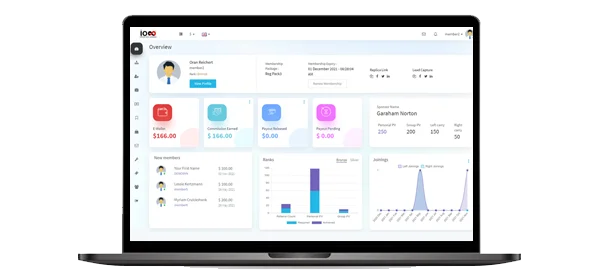
Manual invoicing quickly becomes difficult as distributor networks grow. Advanced platforms such as Infinite MLM Software simplify this process through automated invoice generation, commission tracking, e-wallet management, and centralized financial reporting features that help businesses maintain compliance at scale.
MLM software should automatically manage IVA tax calculations, ISR withholding requirements, and distributor tax reporting. Automated tax handling reduces accounting errors, improves audit readiness, and simplifies commission processing for large distributor networks.
With built-in tax automation, commission management, and financial reporting tools, Infinite MLM Software helps businesses streamline Mexico-specific tax workflows while maintaining accurate payout records and audit-ready transaction histories.
Mexico-based distributors expect payouts in MXN, even when the parent company operates internationally. MLM software must therefore support:
Commission calculations and disbursements must be processed in Mexican pesos to meet distributor expectations.
Systems should lock exchange rates at the time of qualification to prevent commission disputes caused by currency fluctuations.
Financial reconciliation must accurately track and match transactions across multiple countries and currencies.
Distributors must have full visibility into conversion rates, fees, and net payout amounts for cross-border transactions.
All currency conversions must be logged automatically for audit trails, tax compliance, and financial reporting.
Modern MLM platforms also include customizable compensation plans, real-time commission engines, and multi-currency wallet systems that help businesses reduce payout disputes and improve financial transparency across international operations.
Mexican distributors typically prefer local payment systems over international-only gateways. Strong MLM platforms integrate with payment solutions such as:
Latin America’s leading digital wallet and payment platform, widely expected by Mexican distributors for commission payouts.
Mexico’s primary interbank electronic transfer network, ideal for larger commission disbursements and formal business payments.
Banco de Mexico’s real-time digital payment infrastructure for instant transfers, with growing adoption across the business sector.
Integration with local banking systems and mobile wallet infrastructure ensures coverage for distributors across all regions of Mexico.
Platforms like Infinite MLM Software support payment gateway integration, secured auto payout management, and automated withdrawal processing, helping businesses improve distributor trust and payout efficiency.
Successful MLM operations in Mexico also depend on localized distributor experiences. MLM software should support:
All distributor-facing interfaces must be fully localized into Mexican Spanish with proper terminology and formatting.
Dashboards and management tools must be fully responsive and optimized for smartphone access as the primary device.
Systems must perform reliably across varying internet speeds to support distributors in all regions of Mexico.
Earnings disclosures and compliance documentation must meet PROFECO standards and be easily accessible to all distributors.
Commission reports and income statements should be generated automatically and available in real-time through mobile interfaces.
All distributor agreements must be stored digitally with full version control, audit trails, and compliance tracking capabilities.
Features such as multilingual support, responsive mobile dashboards, distributor onboarding tools, replicated websites, and real-time business analytics help companies improve distributor engagement and long-term retention within the Mexican market.
See how Infinite MLM Software handles commission calculations, tax compliance, CFDI invoicing, multi-currency payouts, and local payment integrations for Mexico and other global markets with a free MLM software demo.
For many foreign operators, Mexico has become the foundation for broader Latin American expansion.
After establishing operations successfully in Mexico, companies often expand into:
Latin America’s largest direct selling market, requiring Portuguese localisation and ANVISA regulatory compliance for health products.
A fast-growing Spanish-speaking market with comparatively lower regulatory complexity.
A market with strong direct selling participation but significant inflation-related currency management challenges.
Regional expansion increasingly requires software systems capable of handling multilingual operations, multi-country tax structures, and cross-border payout infrastructure simultaneously.
Mexico continues to emerge as one of the strongest direct selling markets in Latin America, supported by mobile-first commerce, strong distributor participation, and growing consumer demand.
For foreign operators, long-term success depends on balancing compliance, localized payment systems, multilingual operations, and scalable MLM software that supports CFDI invoicing, commission automation, and mobile-first distributor management.
Yes. Direct selling and MLM are legal in Mexico and are regulated primarily through PROFECO under the Ley Federal de Proteccion al Consumidor. Mexico is one of the world’s largest direct selling markets, with approximately 3.7 million active participants. Companies must ensure their compensation plans prioritise legitimate retail product sales rather than recruitment-only income structures.
PROFECO is Mexico’s Federal Consumer Protection Agency. It regulates refund policies, earnings claims, advertising standards, and distributor agreement transparency for direct selling companies. Businesses that violate PROFECO regulations may face financial penalties, public enforcement warnings, or operational restrictions within the Mexican market.
Yes. SAT requires CFDI digital invoices for all commercial transactions, including distributor commission payouts. Each transaction must include valid tax data and invoice formatting according to SAT requirements. High-volume MLM networks generally automate this process through integrated commission and invoicing systems.
Mexican distributors commonly expect Mercado Pago, SPEI bank transfers, CoDi real-time payments, and OXXO Pay support alongside traditional banking methods. Companies that rely solely on PayPal or international gateways frequently encounter payout friction and higher distributor dropout rates.
Mexico generates approximately $6.8 billion USD in annual direct selling retail sales, making it the eighth largest direct selling market globally and the second largest in Latin America. The market includes roughly 3.7 million active distributors, with health, wellness, cosmetics, and homecare products leading overall sales volume.
In most cases, yes. Foreign MLM operators typically register a local entity such as an S. de R.L. or S.A. to properly manage taxation, invoicing, and regulatory compliance in Mexico. A local entity also simplifies interactions with SAT for CFDI invoicing, commission reporting, and withholding tax obligations. While some market entry structures may allow initial testing through partnerships, long-term scalability and legal clarity almost always require formal establishment within Mexico.
Health and wellness, cosmetics, skincare, nutritional supplements, and home care products consistently perform the strongest in Mexico’s direct selling ecosystem. These categories align closely with Mexico’s community-driven buying culture, where personal recommendations and trust-based selling play a major role. Products with repeat purchase cycles and visible lifestyle benefits tend to perform especially well, as they support ongoing distributor engagement and stable commission structures.
Mexico’s regulatory and operational environment makes automation essential. The country requires CFDI invoicing for all transactions, strict tax handling through SAT, and accurate commission reporting across large distributor networks. In addition, businesses must support multilingual operations and integrate local payment methods to ensure smooth distributor experience. A scalable MLM software system helps automate commission calculations, tax compliance, distributor onboarding, and payout workflows, reducing operational complexity and minimizing legal and financial risks.
Mobile usage is central to how direct selling operates in Mexico. Most distributors rely on smartphones for every stage of the business, including recruitment, product sharing, team communication, and commission tracking. Platforms like WhatsApp, Facebook, and Instagram are widely used for social selling and group-based engagement. As a result, successful MLM companies prioritize mobile-first systems that allow distributors to manage their entire business on the go without depending on desktop tools.
Product Specialist & Research Head | Leading Strategic Multilevel Marketing Software Initiatives | MLM Technology Expert


 May 13, 2026