
Types of MLM Bonuses and Commission Structures


MLM bonuses and commission structures are the foundation of any successful network marketing business. The way these incentives are designed directly impacts distributor motivation, recruitment, and long-term growth.
This guide explains the difference between commissions and bonuses, provides a quick overview of key bonus types, and explores each in detail with examples. It also highlights which bonuses suit different compensation plans and how MLM software automates the entire process and includes a dedicated section on MLM incentives and strategies to maximize distributor performance and engagement.
Before exploring different MLM compensation types, it’s important to clearly understand the difference between commissions and bonuses. Although both are earnings for distributors, they serve distinct roles within a compensation plan.
Commissions are tied directly to sales activity and form the core income stream for distributors. Bonuses, on the other hand, are additional incentives designed to reward specific achievements such as recruitment, rank advancement or team performance.
The table below provides a clear comparison:
| Aspect | Commissions | Bonuses |
|---|---|---|
| Basis | Direct sales activity | Milestones & achievements |
| Frequency | Ongoing | Event-based |
| Example | Selling a product | Recruiting a member |
| Purpose | Reward sales | Incentivize growth |
MLM compensation plans often include multiple bonus types, each designed to reward a specific action, whether it’s recruiting new members, generating sales, or building a strong downline structure. For business owners and distributors alike, understanding when and where each bonus applies is essential for choosing the right compensation strategy.
The table below provides a quick, easy-to-scan overview of the most common MLM bonus types, what triggers them, and the compensation plans they are typically used in.
| Bonus Type | Triggered By | Common In |
|---|---|---|
| Sponsor Bonus | Recruiting a member | All plans |
| Pairing Bonus | Balanced binary legs | Binary plan |
| Level Commission | Downline sales | Unilevel, Matrix |
| Matching Bonus | Downline earnings | Binary, Hybrid |
| Position Bonus | Matrix placement | Matrix |
| Forced Matrix Bonus | Matrix completion | Matrix |
| Fast Start Bonus | Initial sales | All plans |
| Party Bonus | Events/meetings | Direct selling |
| Roll-up Bonus | Skipped inactive members | All plans |
| Generation Bonus | Generation sales | Generation plan |
| Infinity Bonus | Beyond depth levels | Leadership ranks |
| Matrix Completion Bonus | Full matrix filled | Matrix |
| Cycle Commission | Board completion | Board plan |
| Re-entry Bonus | Rejoining matrix | Matrix, Board |
| Performance Bonus | Target achievement | All plans |
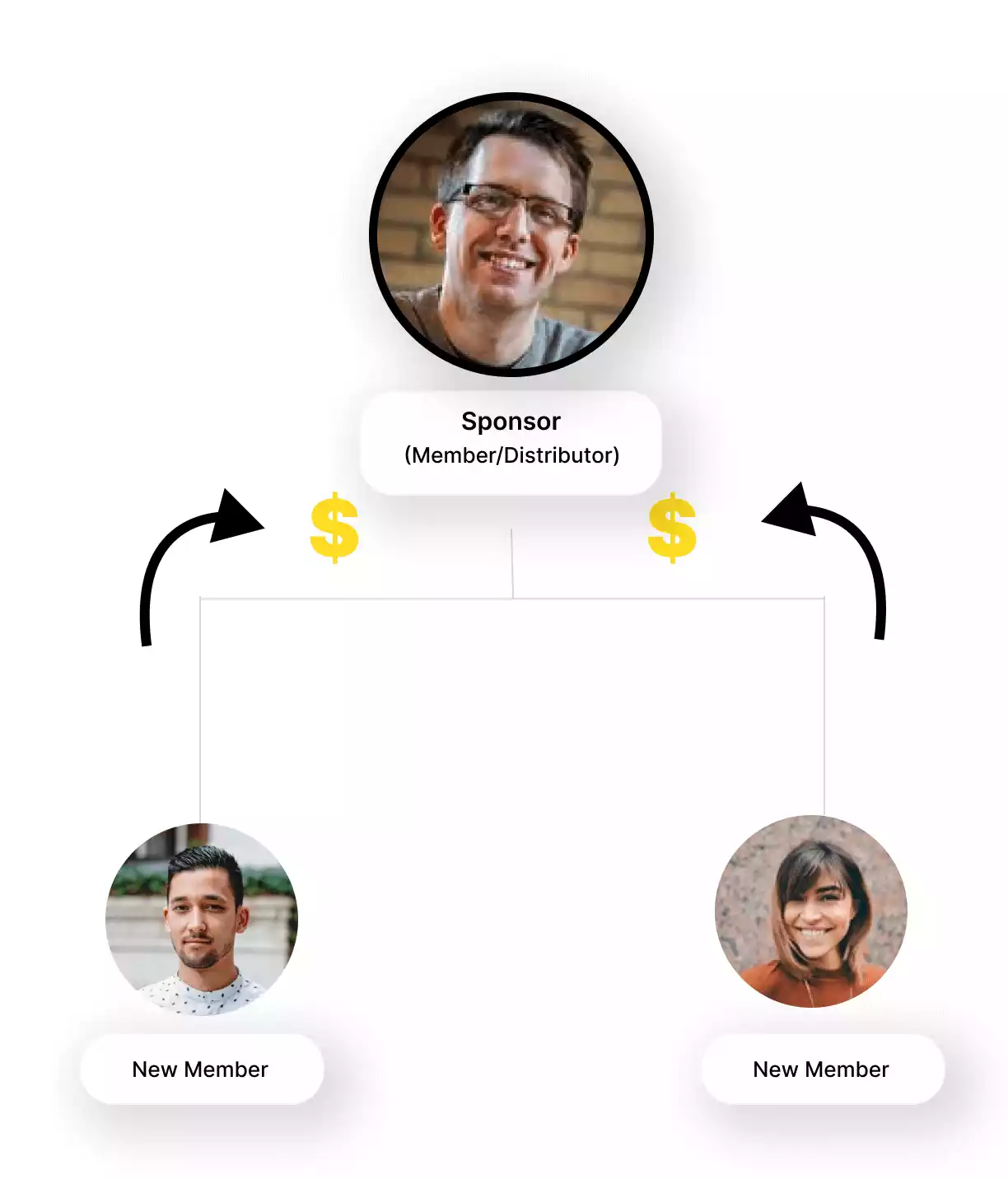
The sponsor bonus is awarded when a distributor recruits a new member into the network. It is one of the most common incentives used across all MLM compensation plans and plays a key role in driving network expansion.
How it works: A distributor earns a fixed percentage or flat amount
when their recruit joins and makes a qualifying purchase or activation.
Typical Range: 5%–20%
Best For: All compensation plans
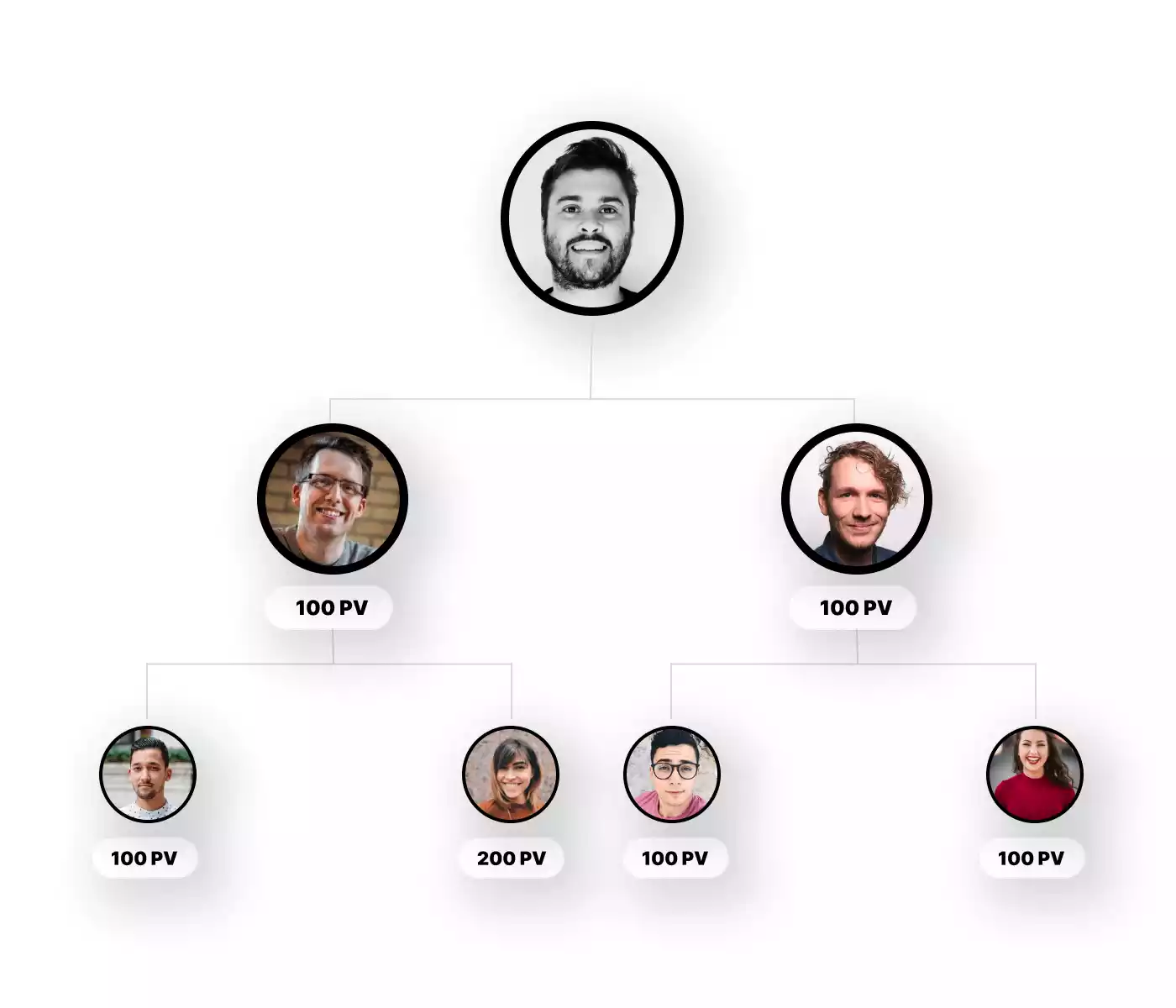
The pairing bonus is a core feature of binary MLM plans, rewarding distributors for maintaining balanced sales volume across two legs, left and right.
How it works: The system calculates bonus based on the weaker leg
volume, ensuring balanced growth. Companies may apply caps or flush rules on unused
volume.
Key Factors: Weak leg calculation, caps, carry-forward rules
Best For: Binary plans
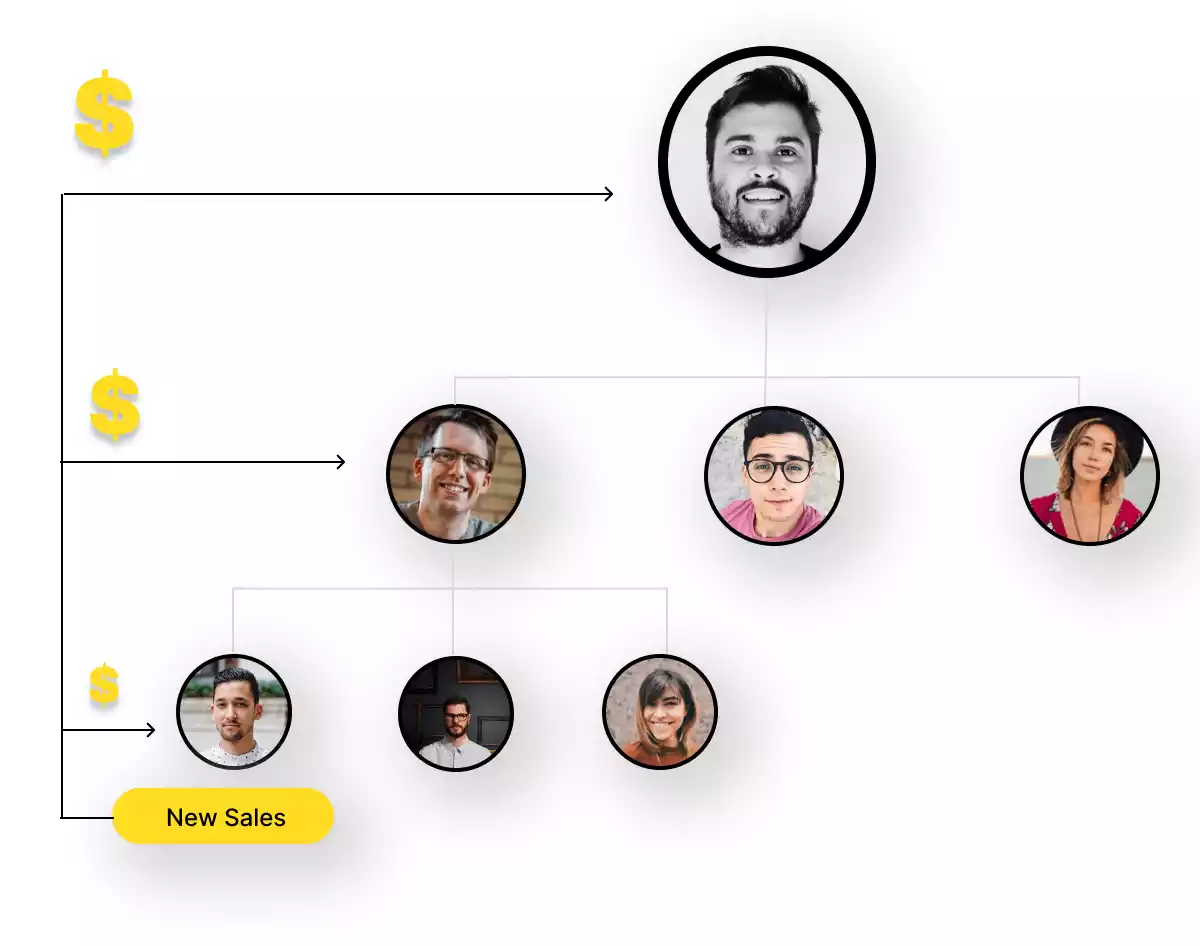
Level commissions allow distributors to earn from the sales generated by their downline across multiple levels, making it a powerful passive income stream.
How it works: Each level in the network is assigned a fixed commission
percentage, typically decreasing with depth.
Typical Depth: 3–7 levels
Best For: Unilevel
and matrix plans
Matching bonuses reward distributors by giving them a percentage of the commissions earned by their direct recruits, encouraging leadership and mentoring.
How it works: A sponsor earns a percentage of the earnings (such as
pairing bonuses) generated by their downline.
Purpose: Promote team support and duplication
Best For: Binary and hybrid plans

Position bonuses are specific to matrix plans and are triggered when new members fill designated positions within the structure.
How it works: When a downline member occupies a predefined slot in the
matrix, the upline distributor receives a bonus.
Best For: Matrix plans
Focus: Structured placement growth

The forced matrix bonus is paid when a distributor fills all positions in a predefined matrix structure, ensuring uniform team growth.
How it works: The system limits width and depth, and completing all
positions triggers a fixed reward.
Focus: Controlled and predictable expansion
Best For: Matrix plans
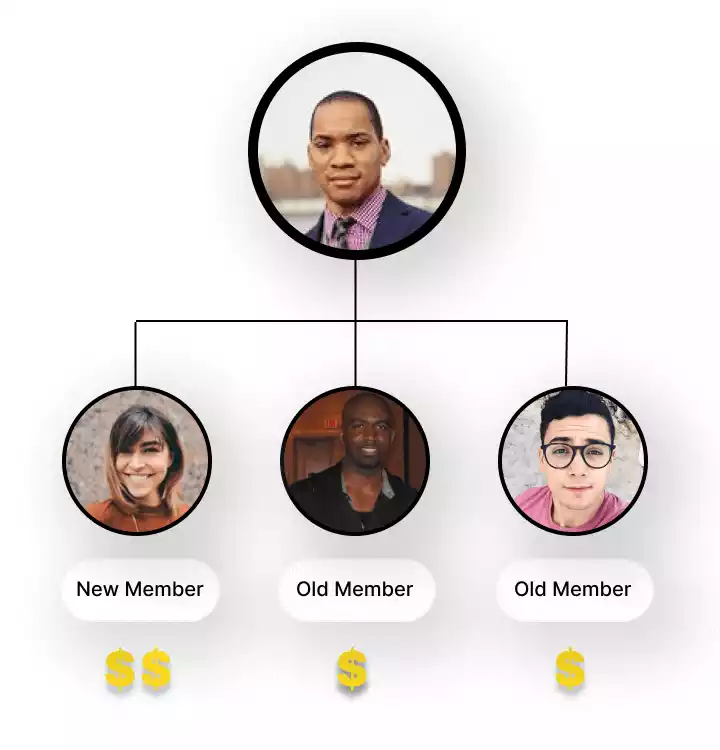
Fast start bonuses are designed to motivate new distributors by offering higher commissions during their initial activity period.
How it works: New members receive increased commission rates for their
first few sales or within a limited time frame.
Goal: Promote early engagement and momentum
Best For: All plans
The party bonus is commonly used in direct selling models where distributors host events to promote products and recruit new members.
How it works: Bonuses are awarded based on sales volume or sign-ups
generated during events or group sessions.
Common In: Party plan MLM
businesses
Focus: Community-based selling

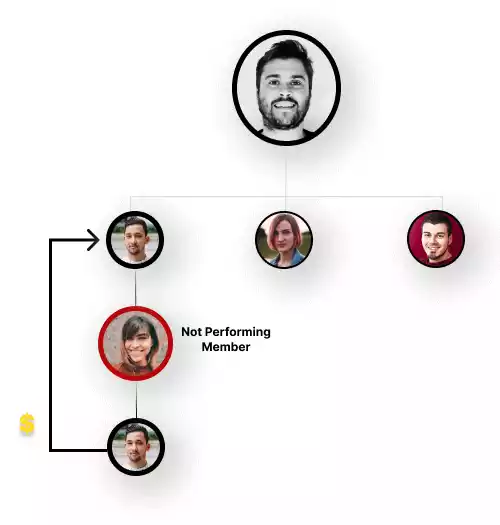
The roll-up or compression bonus ensures distributors do not lose earnings due to inactive members in their downline.
How it works: Inactive members are skipped, and commissions from active
lower levels are passed up to eligible distributors.
Best For: All plans
Focus: Reward active participation
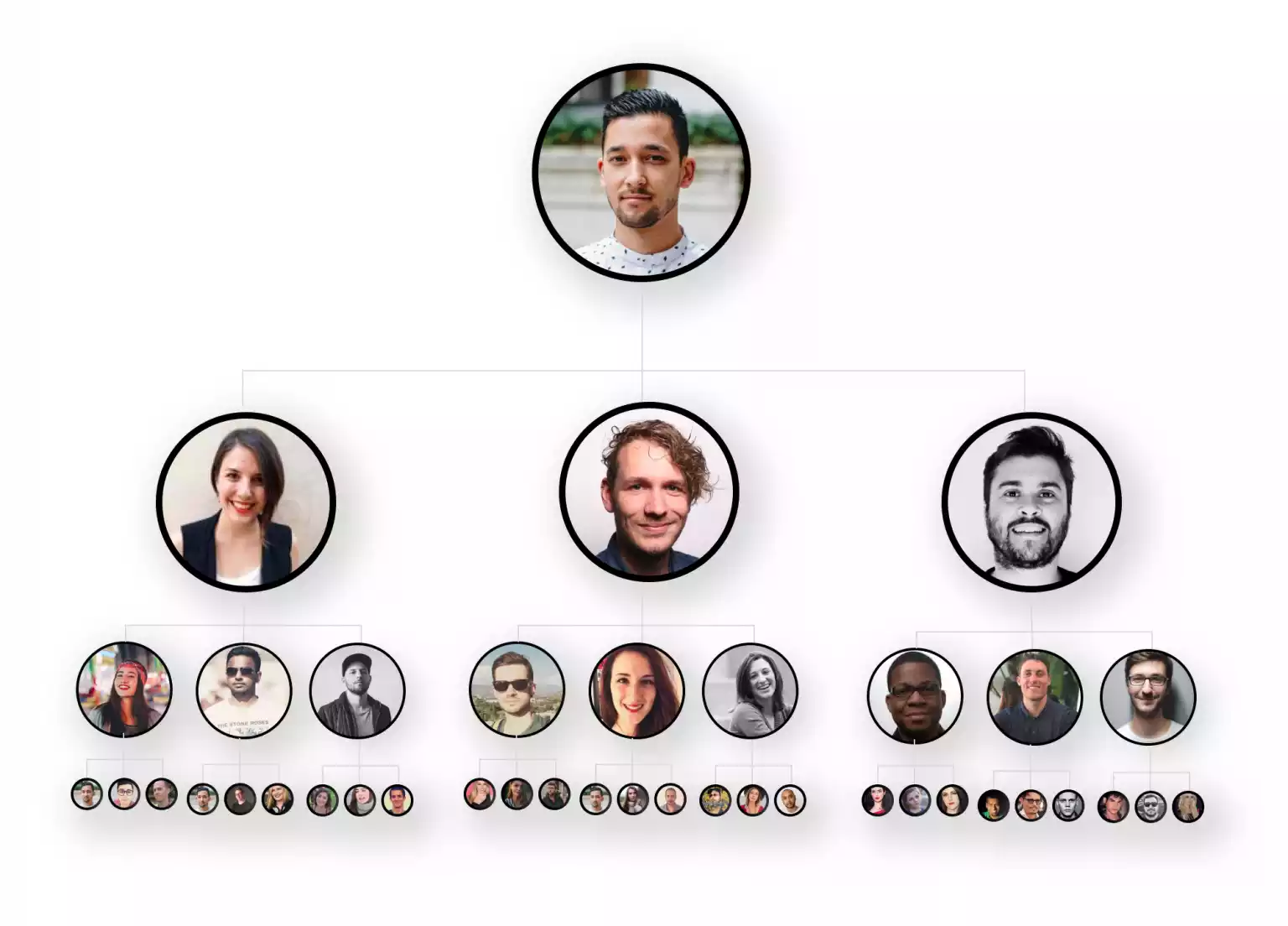
Generation bonuses reward distributors based on the sales performance of different generations within their network.
How it works: Each generation is assigned a specific commission rate,
and earnings are calculated accordingly.
Best For: Leadership-based plans, Generation MLM plan
Focus: Deep network growth
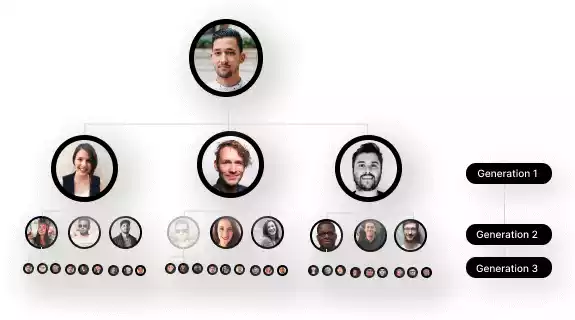
Infinity bonuses are designed for top-ranking distributors, allowing them to earn beyond traditional level limits.
How it works: Distributors earn a percentage of sales beyond a certain
depth, often with rank-based conditions.
Who Benefits: High-level leaders
Focus: Long-term leadership rewards

Matrix completion bonuses are awarded when a distributor successfully fills all positions within a matrix structure.
How it works: Once the entire matrix is filled across all levels, a
bonus is triggered.
Best For: Matrix plans
Focus: Full network expansion
This bonus is used in board or cycle-based MLM plans where distributors progress through levels by filling positions.
How it works: When a board is fully filled, the distributor cycles to
the next level and earns a commission.
Best For: Board
plans
Focus: Structured progression
Re-entry bonuses encourage distributors to rejoin a matrix or board after completing it, allowing them to earn repeatedly.
How it works: After completing a cycle, distributors can re-enter the
structure and qualify for additional bonuses.
Best For: Matrix and board plans
Focus: Continuous participation
Performance bonuses are awarded to distributors who achieve or exceed predefined targets such as sales volume or recruitment.
How it works: Bonuses are tied to measurable KPIs and may be offered
monthly, quarterly, or annually.
Based On: Sales, recruitment, rank advancement
Best For: All plans

Not all MLM bonuses work equally well across every compensation structure. Each plan has its own logic and growth pattern, which determines the most effective bonus types to use.
The table below highlights which bonus types are best suited for each major MLM compensation plan:
| Plan Type | Recommended Bonuses | |
|---|---|---|
| Binary | Pairing, Matching | |
| Unilevel | Level Commission, Performance | |
| Matrix | Position, Forced Matrix, Completion | |
| Board | Cycle, Re-entry | |
| Hybrid | Combination of all | |
Modern MLM software simplifies complex compensation structures by automating calculations, tracking distributor activity, and ensuring accurate payouts across all levels of the network.
MLM software eliminates manual calculation errors by automatically processing commissions and bonuses based on predefined rules. It ensures every distributor is paid correctly and on time, even in large networks with thousands of members.
The software allows businesses to fully customize compensation plans, including binary, unilevel, matrix, and hybrid structures. Companies can define commission rates, bonus conditions, payout cycles and rank qualifications to match their exact business model.
Distributors and administrators gain access to real-time reports that show earnings, team performance, and sales activity. This transparency helps distributors track progress, identify growth opportunities, and make informed decisions.
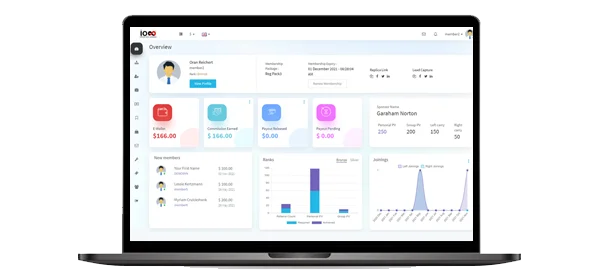
Intuitive dashboards make it easy for users to monitor commissions, visualize downline structures, and track key metrics in one place. Even users with minimal technical knowledge can navigate the system, improving adoption and overall user experience.
Advanced MLM platforms now use AI to analyze compensation data, optimize payout structures, and detect unusual patterns or fraud risks. This not only improves profitability but also ensures compliance and smarter decision-making.
MLM incentives are a combination of direct sales earnings, recruitment-based rewards, and lifestyle incentives designed to motivate distributors to sell products and grow their networks.
In most MLM businesses, incentive structures are closely tied to compensation plans such as binary, unilevel, and hybrid models. These plans determine how payouts flow through the network, often rewarding high-performing leaders with deeper commissions and higher percentage overrides.
Direct sales commissions are the foundation of any MLM incentive system. Distributors earn income from selling products directly to customers.
Recruitment / Downline Bonuses reward distributors for building and managing a team. Earnings are generated from the sales activity of downline members.
In Rank Advancement Rewards, distributors receive bonuses when they achieve higher ranks within the compensation plan.
Fast Start incentives are designed to engage new distributors quickly by rewarding early performance.
High-performing distributors are rewarded with lifestyle benefits such as travel, cars, or financial perks.
Individualized Incentives are customized rewards tailored to individual distributor behavior, performance, or goals.
Beyond standard rewards, successful MLM companies continuously refine their incentive strategies to promote distributor productivity and engagement.
Well-designed incentive programs directly influence:
Companies that actively optimize incentives outperform those using static compensation models.
Introduce time-bound incentives tied to measurable goals such as sales or recruitment.
Reward distributors progressively as they achieve higher performance levels.
Use rankings, badges, and rewards to create a competitive and engaging environment.
Align incentives with product launches, seasonal campaigns, or company milestones.
Utilize data to tailor rewards based on distributor behavior and performance.
Strategically designed incentive programs deliver measurable business outcomes:
Even small improvements in incentive design can significantly impact long-term growth and profitability.
Understanding MLM bonuses and commission structures is key to building a plan that drives growth, motivates distributors, and ensures long-term success.
Successful MLM businesses combine multiple bonus types with well-designed incentive programs such as sales commissions, recruitment rewards, and lifestyle incentives to boost engagement and performance.
MLM software simplifies this process by automating calculations and ensuring accuracy and transparency, making it essential for growing and optimizing your compensation strategy.
MLM commissions are earnings generated from direct sales or downline sales activity, while bonuses are additional rewards given for achieving specific milestones such as recruitment, rank advancement, or team performance. Commissions are ongoing, whereas bonuses are event-based.
The sponsor bonus (also called introducer or referral bonus) is the most widely used across all MLM compensation plans. It rewards distributors for bringing new members into the network.
In a binary plan, distributors build two legs (left and right). A pairing bonus is paid when both legs generate balanced sales volume, typically calculated based on the weaker leg to encourage balanced growth.
A fast start bonus is a higher commission offered to new distributors on their initial sales or within a limited time period. It is designed to encourage early activity and quick engagement.
Yes, modern MLM software automates the calculation of all major bonuses, including pairing, level commissions, matching, generation, and infinity bonuses, ensuring accuracy and real-time payouts.
The right bonus structure depends on your compensation plan. Binary plans benefit from pairing and matching bonuses, unilevel plans from level commissions, and matrix plans from position and completion bonuses.
The most common MLM compensation plans include Binary, Unilevel, Matrix, Board (Cycler), and Hybrid plans. Each structure defines how distributors are organized and how commissions and bonuses are distributed.
There is no single highest-earning plan, as it depends on execution. However, binary and hybrid plans often offer higher earning potential due to leverage from team volume and multiple bonus types.
Product Specialist & Research Head

Looking for a certified, enterprise-ready platform with advanced features for your MLM business? Infinite MLM Software might just be the thing for you.
Connect with Us