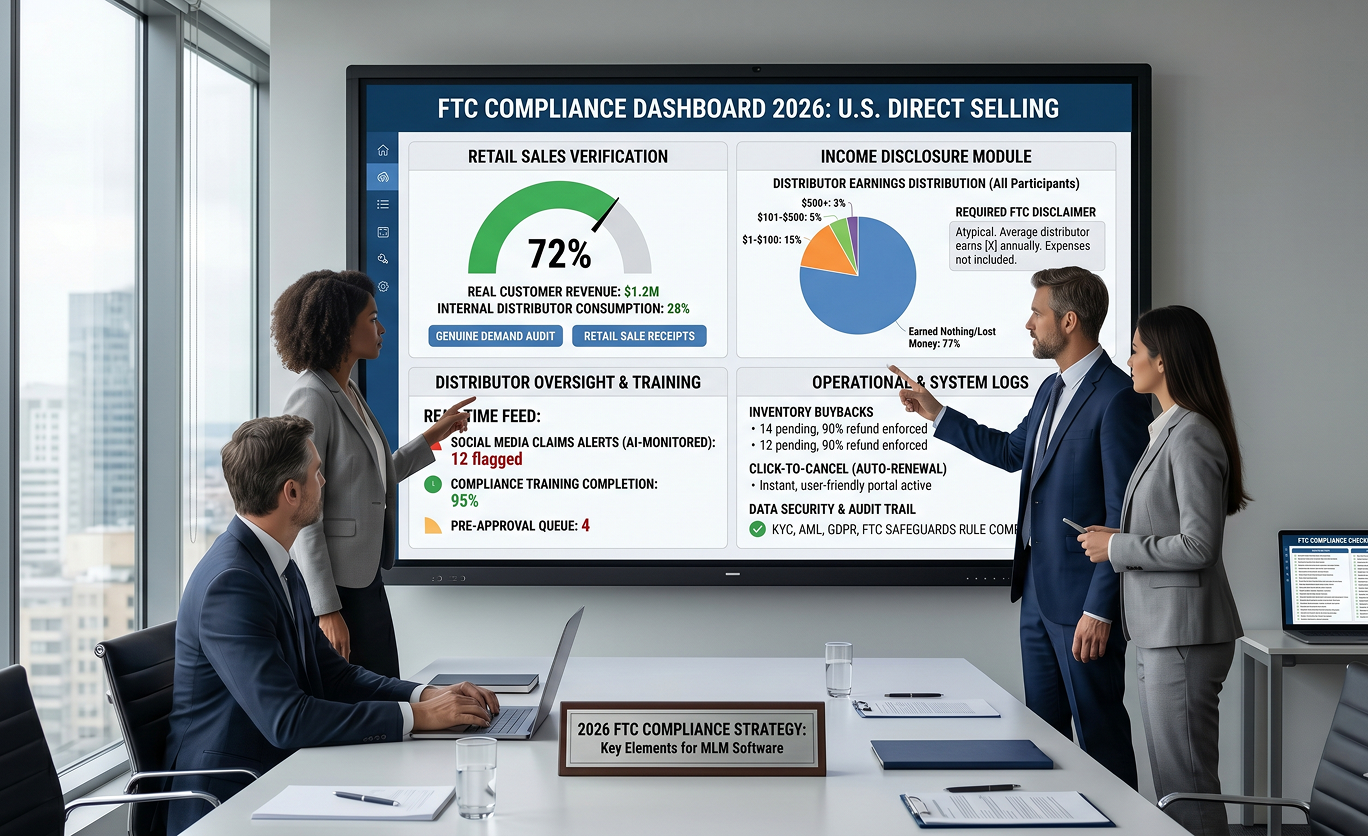
DeFi MLM Platforms: What Business Owners Need to Know Before Building One





Commission delays, cross-border payment issues, and lack of transparency have long been challenges in traditional MLM businesses. Today, DeFi MLM platforms are transforming how modern MLM software operates by using blockchain technology, smart contracts, and decentralized payouts.
These platforms offer faster commission settlements, improved transparency, and seamless global transactions, but they also come with technical, compliance, and operational challenges. Understanding how DeFi MLM systems work is essential for businesses planning to build a scalable and future-ready network marketing platform.
A DeFi MLM platform is a blockchain-powered network marketing system where compensation plan logic is executed through smart contracts instead of centralized payout systems. In traditional MLM operations, the company controls commission calculations, approval workflows, and payout processing. In a decentralized environment, those rules are encoded directly into blockchain-based contracts.
When a sale or referral action occurs, the smart contract automatically reads the distributor genealogy tree, calculates commissions according to the configured plan, and distributes rewards directly to eligible wallet addresses. There is no need for manual approval, period closing, or payroll processing.
Smart contracts remove intermediaries from the payout process. Instead of waiting for manual processing, commissions are automatically transferred based on predefined rules. This makes blockchain MLM software more transparent and efficient than conventional payout systems.
Traditional MLM systems operate through centralized infrastructure. Revenue enters the company account, compensation is calculated on internal servers, and commissions are released through banks or payment processors. In a decentralized model:
The key difference is who controls the fund flow. Traditional systems rely on company-controlled payment cycles, while decentralized MLM software automates settlement through blockchain infrastructure.
Several technologies work together to power modern DeFi MLM platforms:
A successful crypto MLM platform depends on scalable blockchain infrastructure, wallet compatibility, secure smart contracts, and efficient genealogy tracking systems.
Decentralized Finance (DeFi) is transforming network marketing by enabling faster transactions, transparent commission tracking, and borderless payments without relying on traditional banking systems. As businesses seek more secure and automated operations, modern MLM software platforms are increasingly integrating DeFi capabilities to improve trust, scalability, and distributor engagement.
One of the biggest advantages of DeFi MLM software is instant commission processing. Traditional MLM businesses often process payouts in weekly or monthly cycles, causing delays for distributors waiting to receive earnings.
Blockchain smart contracts can distribute commissions within seconds after a qualifying transaction occurs. This faster settlement cycle improves distributor engagement, motivation, and early-stage retention within growing networks.
International MLM companies frequently deal with banking delays, high wire transfer fees, and currency conversion costs when processing commissions globally.
DeFi MLM platforms simplify international transactions using stablecoins like USDT and USDC. Distributors can receive payments quickly with minimal transaction fees regardless of geographic location.
This is especially valuable for businesses operating in regions with limited banking infrastructure or slower financial systems.
Blockchain technology allows commission payouts to be publicly verified through blockchain explorers. Instead of relying entirely on company-generated reports, distributors can independently confirm transactions and payout accuracy. This transparency improves trust within the network and reduces disputes related to earnings or delayed commissions.
The continued growth of decentralized finance is increasing demand for blockchain-based MLM software. Lower Layer 2 transaction fees and broader crypto adoption are making decentralized commission structures more practical for modern network marketing businesses.
As blockchain infrastructure becomes more scalable and user-friendly, more MLM companies are exploring hybrid and decentralized business models.
DeFi-based network marketing platforms generally follow two primary models: centralized hybrid systems and fully decentralized smart contract models. Each approach offers different levels of control, transparency, automation, and risk, making it important for businesses and distributors to understand how these structures operate before joining or launching a platform.
Fully decentralized MLM systems place compensation logic, genealogy tracking, and commission payouts entirely on the blockchain. Once deployed, the smart contracts operate independently without centralized control. These platforms are usually best suited for:
However, modifying the compensation logic after deployment becomes extremely difficult because blockchain contracts are immutable.
Hybrid architecture combines blockchain settlement with traditional backend systems, making it the preferred model for many enterprise-grade MLM businesses.
In a hybrid system:
This approach reduces blockchain gas fees, improves operational scalability, and allows businesses to adjust compensation plans more easily without redeploying entire smart contracts.
Most advanced DeFi MLM software solutions in 2026 follow the hybrid approach because it balances blockchain transparency with operational flexibility.A successful DeFi MLM platform requires secure automation, flexible compensation systems, wallet compatibility, analytics, and strong security infrastructure. These features help improve transparency, scalability, and user adoption in decentralized network marketing systems.
Smart contracts automate commissions, rewards, and payouts without manual intervention. They execute based on predefined conditions, ensuring tamper-proof operations, transparent payouts, immutable transaction records, and automated commission calculations. This improves trust while reducing operational delays and administrative errors.
Modern blockchain MLM platforms should support multiple compensation structures such as unilevel, binary, matrix, and hybrid plans. However, businesses must carefully design these systems because complex on-chain calculations can increase blockchain gas fees. Proper smart contract optimization helps balance advanced compensation logic with transaction efficiency.
Leading DeFi MLM platforms support multiple blockchain ecosystems and wallet integrations to improve accessibility and scalability. Popular integrations often include MetaMask, Trust Wallet, Polygon, Arbitrum, and Base. Multi-chain support also helps reduce transaction costs and improves overall platform flexibility.
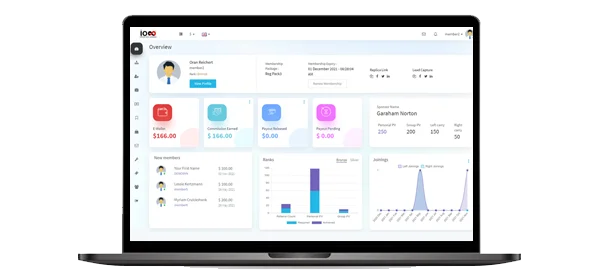
Even decentralized MLM systems require centralized monitoring and reporting tools. An advanced admin dashboard should provide real-time commission tracking, distributor activity monitoring, transaction reporting, and financial insights. These analytics help businesses manage network performance and make informed operational decisions.
Security is one of the most important components of a blockchain-based MLM platform because smart contracts directly manage financial transactions. Features such as encrypted wallet communication, secure APIs, and professional smart contract audits help reduce exploit risks and ensure safe commission processing while improving user trust.
Many distributors entering DeFi network marketing platforms may not have prior cryptocurrency experience. Simplified onboarding processes, guided wallet setup, and beginner-friendly interfaces help users connect wallets, complete transactions, and participate in the platform more confidently. Easier onboarding significantly improves user retention and reduces abandonment rates.
DeFi MLM platforms offer advantages in speed, transparency, and global payments, while traditional MLM software provides easier compliance management and operational flexibility.
| Factor | DeFi MLM Platform | Traditional MLM Software |
|---|---|---|
| Commission Speed | Seconds to minutes | 1–30 days |
| Transparency | Public blockchain trail | Internal reports |
| Commission Reversal | Governance mechanism needed | Standard admin feature |
| Plan Complexity | Better for simpler plans | Supports all plan types |
| Cross-Border Payments | Stablecoins, low fees | Banking delays |
| Compliance | Must be built separately | Often integrated |
| Development Cost | Higher due to audits | Lower upfront cost |
| Time to Market | 3–6 months | 1–2 months |
| Plan Adjustability | Requires redeployment | Simple admin changes |
While DeFi MLM platforms offer automation, transparency, and global scalability, they also introduce technical, financial, and regulatory risks that businesses cannot overlook. Understanding these challenges is essential for building a secure, sustainable, and legally compliant blockchain-based MLM system.
Security risks remain one of the biggest concerns in DeFi MLM software development. Poorly coded smart contracts can expose platforms to reentrancy attacks, overflow errors, liquidity drain exploits, and governance vulnerabilities. Regular security audits and strong contract testing are essential to reduce exploit risks and protect distributor funds.
Blockchain transactions are difficult to reverse once processed, making payout accuracy extremely important. Businesses with high refund or product return rates must carefully structure compensation plans to avoid financial instability caused by irreversible commission distributions and chargeback-related losses.
Cryptocurrency regulations continue evolving across different countries and jurisdictions. Blockchain MLM platforms must consider KYC compliance, AML requirements, regional crypto regulations, and potential securities law exposure to avoid legal complications and operational restrictions.
Blockchain transaction costs can fluctuate significantly depending on network congestion and market activity. High gas fees may increase operational expenses for large distributor networks, making efficient smart contract optimization an important factor for long-term scalability and cost management.
Many network marketing participants are unfamiliar with cryptocurrency wallets, private keys, and blockchain transactions. Complex wallet setup processes can reduce user adoption, making simplified onboarding, guided wallet connections, and beginner-friendly interfaces essential for improving enrollment and retention.
Public blockchain networks may occasionally experience congestion, outages, or temporary downtime. Hybrid platform architectures help reduce operational risks by allowing core workflows and administrative functions to continue even when blockchain settlement processes are temporarily delayed.
Not every MLM compensation structure works efficiently in a blockchain environment. Since smart contracts execute commission calculations directly on-chain, compensation complexity can heavily impact transaction speed, scalability, and operational costs. Businesses planning to launch a DeFi MLM platform must carefully evaluate which compensation model aligns best with blockchain efficiency and long-term sustainability.
Unilevel compensation structures are widely considered the most blockchain-friendly option because of their straightforward hierarchy and simplified payout calculations. Unlike more complex compensation models, unilevel systems distribute commissions through a single referral structure, making them easier to automate using smart contracts.
Unilevel plans require fewer on-chain calculations, helping reduce gas fees and improve transaction speed. Their simple structure also makes smart contract auditing easier and improves scalability. Many businesses use a unilevel commission calculator in their MLM software to automate level-wise payouts and improve commission accuracy.
Binary compensation plans introduce additional processing requirements because distributors are placed into two legs that require continuous balancing and volume tracking. While binary structures remain popular in traditional MLM businesses, implementing them on blockchain networks can become more resource-intensive.
Binary compensation models involve complex calculations such as leg balancing, carry-forward volumes, matching bonuses, and pair commissions. These repeated on-chain binary calculations significantly increase smart contract execution costs and blockchain gas consumption. As distributor networks grow larger, transaction costs may rise considerably unless the platform uses optimized smart contracts or low-fee blockchain networks.
Matrix compensation structures are among the most technically challenging models to implement efficiently on blockchain systems. Their fixed-width placement logic and multi-level payout structures require extensive calculations that can strain blockchain processing capacity.
Most businesses avoid processing full matrix calculations directly on-chain because of scalability and cost concerns. Instead, they use hybrid architectures where complex matrix calculations are handled off-chain while blockchain networks are used mainly for payout settlements and transaction verification. This approach helps reduce gas fees, improve performance, and maintain operational stability for large MLM networks.
Choosing the right DeFi MLM software provider is critical for building a secure, scalable, and sustainable blockchain-based network marketing platform. Beyond technical development, businesses should evaluate the provider’s blockchain expertise, MLM compensation knowledge, security practices, and long-term support capabilities before making a decision.
A reliable DeFi MLM software provider should clearly explain which parts of the platform operate on-chain and which components remain off-chain. Transparent architecture planning helps businesses understand transaction costs, scalability limitations, and operational flexibility before deployment.
Avoid Unrealistic “Fully On-Chain” Claims: Many providers promote fully decentralized MLM systems, but highly complex compensation plans rarely function efficiently entirely on-chain. Smart contract limitations, gas fees, and scalability challenges often make hybrid architectures a more practical and cost-effective solution for real-world MLM operations.
Launching a blockchain MLM platform is only the beginning. Ongoing maintenance, security monitoring, smart contract optimization, and blockchain updates are necessary to ensure long-term platform performance and stability.
Important Questions to Ask Before Hiring a Provider:
Clear answers to these questions help prevent operational issues and unexpected development costs in the future.
Security should be built into the platform development process from the beginning rather than added later. Audit-ready coding practices help reduce vulnerabilities and improve overall platform reliability.
What to Verify During Vendor Evaluation: Businesses should confirm that the provider has experience coordinating third-party smart contract security audits. A reliable vendor should follow secure development practices, provide proper documentation, and demonstrate previous experience handling blockchain security assessments.
Not all blockchain developers understand the complexity of MLM compensation structures and distributor reward logic. Technical blockchain expertise alone is not enough for successful DeFi MLM development.
Why MLM Industry Experience Matters: The software provider should have experience with both blockchain infrastructure and MLM compensation architecture. This ensures the platform can accurately manage commissions, bonuses, rank calculations, and payout automation without creating scalability or operational issues.
Businesses entering the DeFi MLM market should avoid overcomplicated infrastructure during the early stages of growth. A scalable development approach allows companies to expand features gradually while controlling operational risk and blockchain costs.
Scalable DeFi MLM Development Strategy: Many successful DeFi MLM platforms begin with crypto payment integration, referral settlement automation, and stablecoin payouts. As the distributor network grows, additional blockchain automation, advanced compensation features, and multi-chain capabilities can be introduced gradually for better scalability and system stability.
Infinite MLM Software supports businesses looking to integrate blockchain functionality into MLM operations without forcing a completely decentralized structure from day one.
The platform provides:
This approach allows businesses to combine blockchain transparency with practical backend management, making it easier to handle compliance, genealogy management, product returns, and compensation adjustments.
Blockchain technology is changing network marketing through faster payouts, transparent commissions, and global transactions. Successful DeFi MLM platforms require scalable architecture, strong security, regulatory awareness, and user-friendly experiences. Hybrid systems are often ideal for traditional MLM businesses, while fully decentralized models may suit crypto-native platforms. Choosing the right software provider early is essential for long-term scalability and operational stability.
Integrate blockchain functionality, automate transparent commission payouts, and scale globally with our future-ready MLM solutions.
A DeFi MLM platform uses blockchain smart contracts to automate commission calculations and payouts directly to distributor wallets. Unlike traditional MLM software, which depends on centralized servers, banking systems, and manual payout cycles, DeFi MLM systems process transactions on-chain for faster settlement, improved transparency, and reduced payment dependency on intermediaries.
Yes, DeFi MLM software can operate legally, but businesses must comply with regional cryptocurrency regulations, KYC requirements, AML policies, taxation rules, and securities laws where applicable. Compliance requirements vary by country, so businesses should consult legal and blockchain compliance experts before launch.
Popular blockchain networks for DeFi MLM platforms include Ethereum, BNB Smart Chain, Polygon, Arbitrum, and Base. These networks are commonly chosen because of their scalability, smart contract support, security, and lower transaction fees, especially on Layer 2 ecosystems.
Unilevel plans are considered the most blockchain-efficient because they require fewer on-chain calculations and lower gas fees. Binary and matrix compensation plans can also work on blockchain, but they usually require hybrid architecture to manage complex calculations, leg balancing, and scalability more efficiently.
The development cost of a DeFi MLM platform can range from $5,000 to over $500,000 depending on smart contract complexity, compensation plan structure, blockchain integrations, security audits, multi-chain support, and platform customization requirements. Audit costs and compliance implementation can significantly impact the total budget.
Yes. Hybrid architecture is generally recommended for physical product MLM businesses because it manages returns, refunds, inventory systems, compliance workflows, and customer management more effectively while still supporting blockchain-based payouts and transparency.
A hybrid MLM platform combines blockchain settlement with traditional backend systems for genealogy tracking, reporting, compliance, and administrative management. A fully decentralized MLM platform stores compensation logic, genealogy, and payouts entirely on-chain with minimal centralized control.
Most DeFi MLM platform projects take approximately 3–6 months to launch depending on feature complexity, smart contract development, blockchain integrations, audit timelines, compliance implementation, and custom compensation plan requirements. Highly customized enterprise platforms may require additional development time.
Product Specialist & Research Head | Leading Strategic Multilevel Marketing Software Initiatives | MLM Technology Expert


 May 22, 2026