
Service-Based MLM Software: How to Choose the Right Platform


Service-based MLMs rely on subscriptions and long-term relationships rather than one-time sales. Using software meant for physical products can cause billing errors, compliance risks, and incorrect commissions. The right MLM software supports recurring revenue, regulatory compliance, and customer retention, enabling sustainable, scalable growth.
Contents
At a surface level, both service MLMs and product MLMs rely on distributor networks, MLM compensation plans, and recruitment. But beneath that similarity, their operational realities diverge sharply.
Product MLMs revolve around inventory flow. Boxes are manufactured, stored, shipped, delivered, and consumed. Once the product reaches the customer, the transaction is largely complete until the next purchase.
Service MLMs, by contrast, sell access, coverage, or ongoing benefits. Insurance policies, telecom plans, energy connections, education platforms, or subscription-based digital services don’t “ship.” They activate and then they persist over time. Revenue is generated not when the contract is signed, but as long as the service remains active.
This means success is measured less by sales volume and more by retention duration.
When service-based MLMs use software built for physical products, several problems emerge:
For industries like insurance, finance, utilities, or education, this mismatch creates confusion across every department from distributors to accounting teams.
In service MLMs, customer lifetime value outweighs immediate sales. A customer who stays active for 24 months is exponentially more valuable than one who cancels after the first billing cycle. Software must therefore prioritize:
Platforms that fail to emphasize retention push businesses into a constant acquisition loop, higher marketing costs, rising churn, and shrinking margins.
Many MLM companies unknowingly overspend on features they don’t need while missing the ones they do.
Inventory-heavy MLM software includes modules for:
For service businesses, these tools add zero operational value. Yet companies still pay for them through higher licensing fees, maintenance costs, and complexity. This bloat doesn’t just waste money it slows down onboarding, confuses distributors, and complicates reporting.
Product software measures success by:
Service MLMs need to track:
When systems track “items delivered” instead of “services active,” leadership loses visibility into real business health.
One of the most damaging consequences of using the wrong system is incorrect commission payouts. If software doesn’t link commissions to service status:
Over time, this creates profit leakage that quietly drains revenue.
Service-based MLMs depend on systems that can manage subscriptions, compliance, and recurring commissions with accuracy over time. Unlike product-focused platforms, service-based MLM software must support ongoing billing, retention tracking, and automated payouts.
Recurring billing is the financial foundation of a service-based MLM. Since revenue is generated over time, the software must handle billing, commission modules, and auto payout accurately and consistently. Without automation, teams face manual corrections, payment delays, and revenue leakage.
The platform should support flexible billing structures, including:
Manual billing increases errors and missed payments. Automated billing ensures predictable cash flow and smoother financial operations.
Payment failures due to expired cards or insufficient funds are unavoidable. Effective software goes beyond flagging issues by:
Each recovered payment preserves revenue without additional customer acquisition costs.
Service MLMs earn revenue over time, making accurate commission calculation essential. The system must support:
This ensures distributors are rewarded for long-term customer retention, not just initial sign-ups.
When customers cancel early, commissions paid in advance must be reversed automatically. Without built-in clawback logic tied to commission calculation:
Automated clawbacks protect profitability while maintaining transparency.
To complete the revenue cycle, the software should support automated payouts of commissions based on predefined schedules and rules. Automated payouts:
When billing, commission calculation, clawbacks, and auto payout work together, the financial backbone of a service-based MLM becomes reliable and scalable.
Service MLMs often operate in regulated industries. Compliance failures don’t just slow growth, they can shut businesses down.
The software should enforce:
Rules should be system-enforced, not reliant on human memory.
For sectors like insurance or financial services:
This prevents accidental violations and protects brand reputation.
Fraud prevention starts at onboarding. The platform should verify:
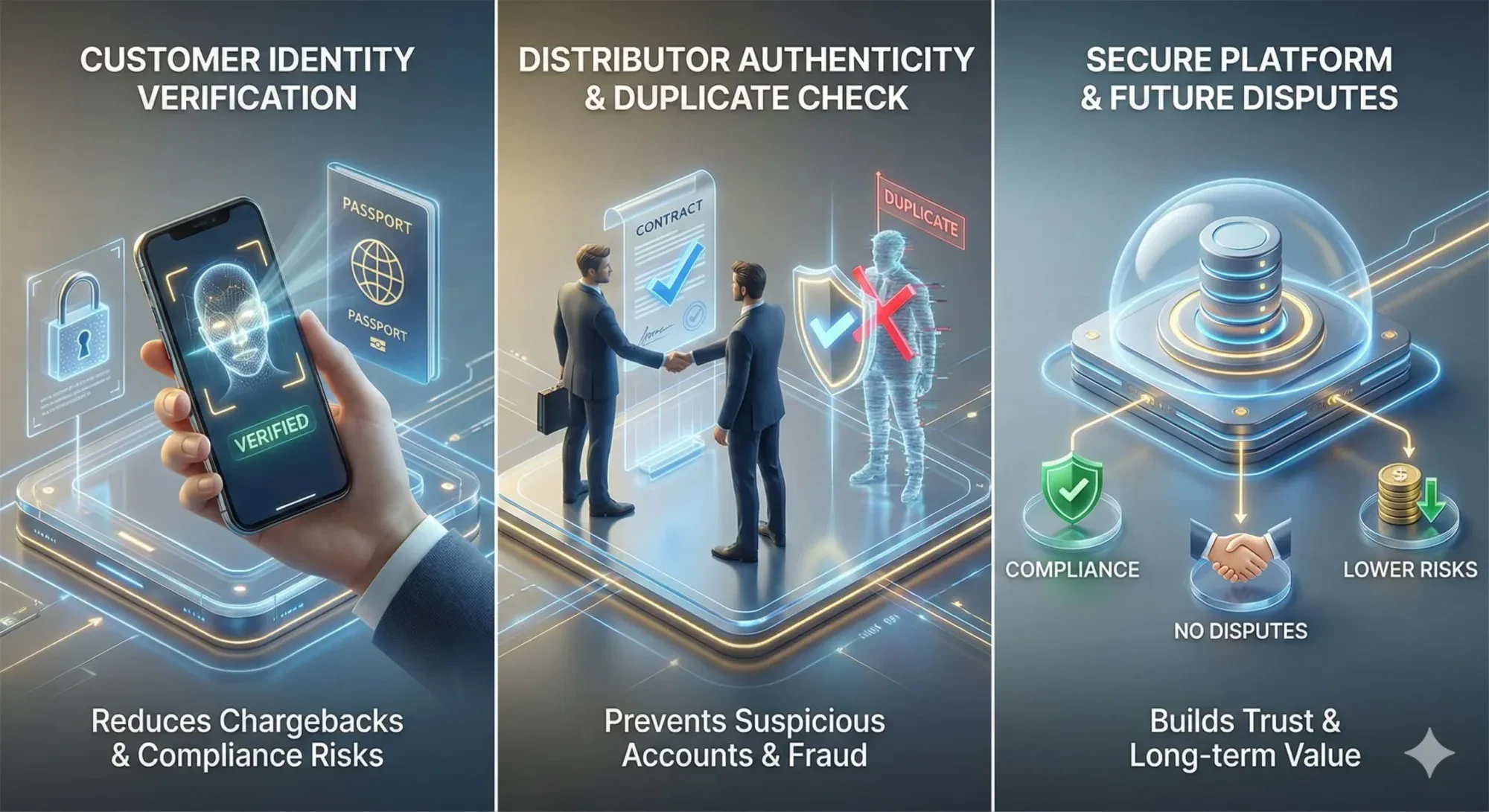
This reduces chargebacks, compliance risks, and future disputes.
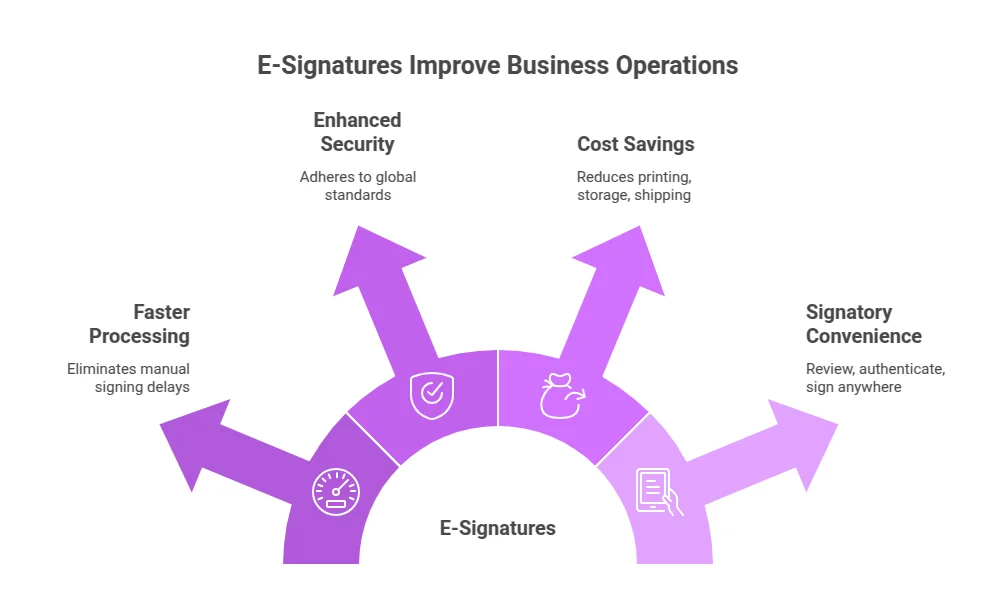
Service contracts are legally binding documents. Built-in e-signature tools will helps in:
In service-based MLMs, customer churn rarely happens overnight. It usually starts with silence, customers stop logging in, stop using benefits, or gradually disengage. This inactivity is the earliest and most reliable warning sign that a cancellation is coming.
The right software must track whether customers are actually using the service they signed up for. This includes:
Usage data shows whether customers are receiving real value, not just whether payments are going through. A customer who is paying but not using the service is at high risk of cancelling. By monitoring usage, MLM businesses can identify problems early and take corrective action before revenue is lost.
When customer activity drops, the system should respond automatically. Instead of waiting for a cancellation request, the software should:
These alerts turn distributors into relationship managers rather than one-time sellers. With timely insights, distributors can reach out, address concerns, explain benefits, or re-engage customers, often preventing cancellations before they happen.
Service MLMs grow through retention, not daily sales volume. Instead of focusing only on new sign-ups, leadership needs visibility into:
These insights help companies reward distributors who retain customers, refine training strategies, and build a business model centered on long-term value. The result is a shift from short-term wins to predictable, sustainable growth.
Many service-based MLM companies do not deliver the service themselves. Instead, they act as intermediaries, selling services provided by telecom operators, utility companies, insurance carriers, education platforms, or other external partners. In such models, seamless system integration is critical for accuracy and scalability.
The software must integrate directly with third-party service providers through secure APIs. These integrations allow the system to:
Without direct integration, teams rely on manual confirmations, spreadsheets, or delayed updates. This leads to activation errors, commission disputes, and poor customer experience.
Real-time communication between the MLM platform and service providers ensures:
When data flows instantly, everyone in the network works with the same, accurate information. This transparency builds trust among distributors, customers, and partners.
Distributors should not have to manage multiple logins across different service platforms. A well-designed system provides a single dashboard where distributors can:
By centralizing access, the software improves productivity, reduces confusion, and allows distributors to focus on selling and supporting customers rather than navigating fragmented systems.
Before committing to any platform, decision-makers should demand clear answers:
Vague answers signal future operational pain.
Service-based MLMs succeed through long-term customer relationships, not one-time sales. The right software supports this by managing subscriptions, compliance, and recurring commissions with accuracy and transparency. Platforms built for physical products fall short in handling these ongoing complexities. Choosing service-focused MLM software is a strategic move that enables stable growth, customer trust, and sustainable revenue over time.
Service‑based MLM software focuses on recurring billing, subscription tracking, retention metrics, and ongoing commission logic, whereas product‑focused systems emphasize inventory and one‑time sales, a mismatch that can hinder recurring revenue and cause errors.
Subscription billing automates recurring payments; monthly, quarterly, or annually and links them to service status and commissions, reducing manual errors and revenue loss.
The right system supports automatic commission clawbacks when a subscriber cancels, protecting profitability and ensuring accurate payouts tied to active services.
Yes, top platforms include built-in compliance tools like geographic restrictions, license validation, and audit logging to reduce legal risk.
Look for secure API integrations with third-party service providers so activation and billing data sync in real time, ensuring accurate customer status and commission triggers.
Costs vary by feature set, customization, and support, with subscription pricing common for SaaS models and optional one-time license models available, always evaluating pricing transparency and recurring fees.
Co-founder and Chief Marketing Officer at iOSS

Looking for a certified, enterprise-ready platform with advanced features for your MLM business? Infinite MLM Software might just be the thing for you.
Connect with Us