
Party Plan MLM Software Guide 2026: How to Choose the Right Platform

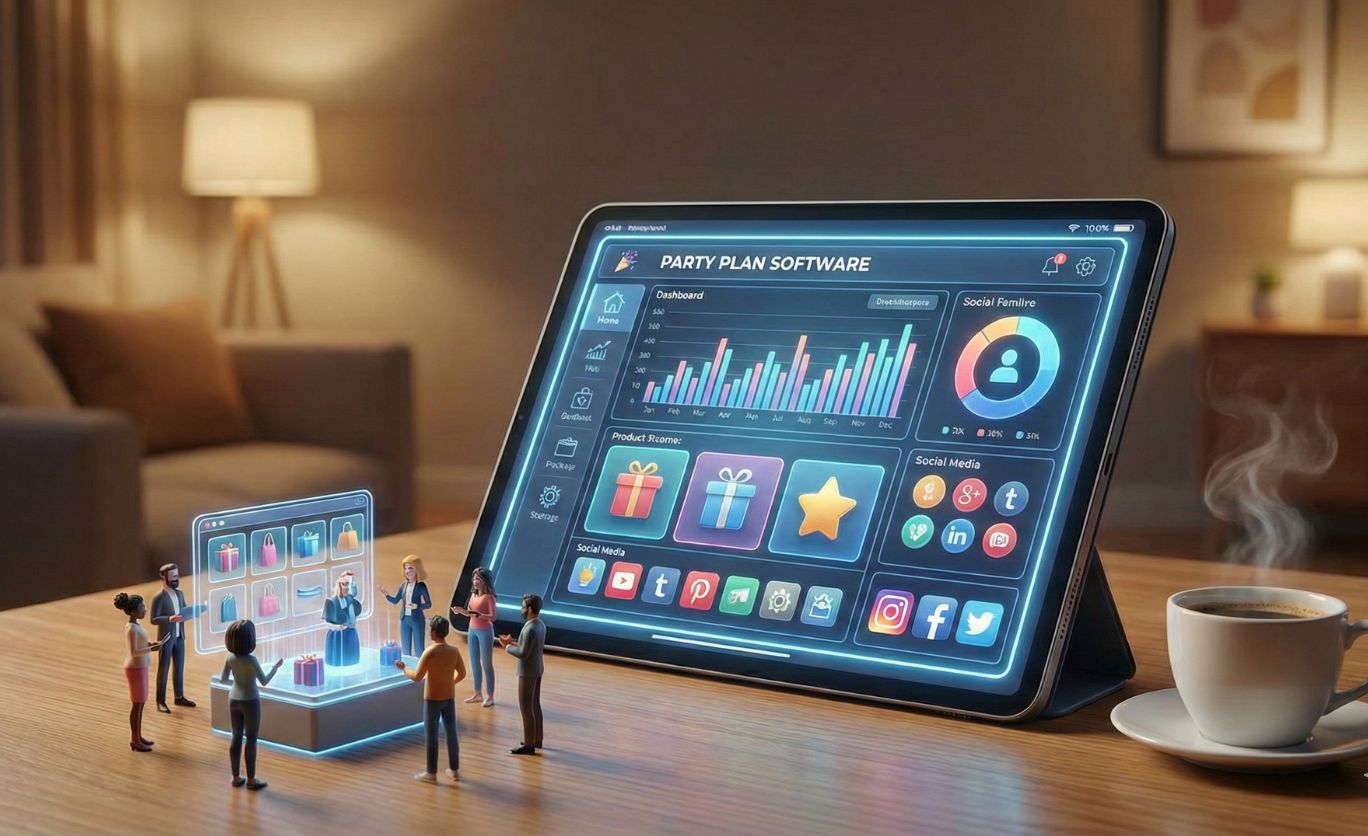
The party plan model continues to evolve rapidly, blending traditional home demonstrations with high-performance digital selling systems. In 2026, direct selling businesses no longer rely on outdated tools or fragmented workflows.
Instead, they depend on integrated technology ecosystems that enhance distributor capabilities, automate payouts, unify eCommerce operations, and streamline global expansion. Choosing the right party plan software is a strategic decision. It influences everything from compliance and compensation accuracy to customer satisfaction and downline productivity.
This guide provides a deep breakdown of the 2026 features, considerations, and innovations shaping the future of party plan software and MLM operations.
Modern party plan MLM software is more than an event-hosting tool. It functions as a comprehensive digital backbone for multi-level marketing companies, combining eCommerce, compensation engines, distributor management, training, analytics, and automation under one system.
This generation of software integrates tightly with major eCommerce platforms such as WooCommerce, Magento, and Shopify, enabling seamless selling before, during, and after parties. Real-time product availability is handled through an inventory system that prevents stockouts and synchronizes all product variations across channels.
An advanced platform also includes:
Engines that ensure accurate, dispute-free payouts.
Tools for distributors to view their downline structure instantly.
Features that allow one-click sharing of "shoppable carts" to social media.
Equipped with virtual party rooms, hostess reward automation, and live demo support, party plan software has become the operational core of every growing MLM business.
The stakes are higher in 2026. Customers are more selective, distributors are more data-driven, and competition is intense. The wrong software results in incorrect payouts, compliance issues, lost sales, and frustrated teams.
Top reasons your platform choice matters:
Fast, accurate payout systems and visible rank metrics help distributors track rank progression and downline growth effortlessly.
Automation in tax calculations, e-wallets, and auto-ship reduces dependency on manual administrative intervention.
Fewer checkout issues, improved personalization, and stronger storefront performance result in higher conversions.
Support for multi-currency, multi-language, regional pricing, taxation, and compliance rules enables true global MLM expansion.
Validate payouts, model real volumes, and preview the full distributor experience risk-free.
Every party plan company has unique requirements, but in 2026, these features are non-negotiable.
Your system must support all major MLM compensation plans, including Binary, Unilevel, Matrix, Hybrid, Breakaway, and Stair-Step. Accurate modeling is essential for distributors who work under spillover-sensitive structures.
Note: The platform should also support Dynamic Compression, promotional bonuses, leadership rewards, and matching bonuses with absolute accuracy. A built-in automated commission calculator is the foundation of trust.
Modern party plan growth depends heavily on digital sales funnels. Replicated websites are crucial for enabling large teams to sell without technical knowledge. These personalized sites should deliver:
Distributors no longer sit at desks to run their businesses. Reliable mobile apps enable them to host parties, track orders, manage follow-ups, and check compensation from their phones. Mobile accessibility is not optional; it is a direct contributor to productivity.
The eCommerce engine powering your MLM company must allow seamless catalog syncing, auto-ship rules, and warehouse control. Integrating with the right e-commerce platforms ensures consistent product availability and unified reporting.
Distributor success depends on follow-up discipline. Strong CRM capabilities handle lead storage, follow-up reminders, and customer segmentation. This is why scalable systems integrate accurately with enterprise solutions like Salesforce or HubSpot.
MLM companies store sensitive customer data and payout information. Strong platforms mitigate data security issues through:
Your chosen software must support rapid growth, volume spikes during campaigns, and heavy enrollment periods without crashing.
Next-generation platforms are beginning to incorporate blockchain technology to automate "Smart Contracts" for transparent payout validation. While not universal yet, this feature is shaping the future of trust in the industry.
When comparing software providers, use this checklist to avoid common pitfalls:
| Evaluation Criteria | What to Look For |
|---|---|
| Migration Capability | Can they perform a "Sandbox Migration" to test your data before going live? |
| API Architecture | Do they have open APIs to connect with Shopify, ShipStation, and Avalara? |
| Support SLAs | Do they offer 24/7 support for critical issues (essential for weekend parties)? |
| Customization | Can they modify the code to fit your specific "Hybrid" compensation rules? |
Vendors who offer software for "free" often take a massive percentage of every transaction. This becomes a tax on your growth that you can never escape.
If they can’t explain step-by-step how your distributor data moves from your old system to the new one, do not proceed. This is a major warning sign that they lack enterprise experience.
Party plan events peak on Friday nights and weekends. If support is only available 9-5 Mon-Fri, your brand is at risk of a public failure during a launch event.
See how your compensation plan performs during a high-volume hybrid party; risk free.
The right party plan software is the backbone of revenue, compliance, and hybrid selling. Choose a platform built for automation, accuracy, and scale. Anything less limits growth and adds risk.
The right system becomes your engine for stronger sales, smoother operations, and long-term direct selling success.
Party Plan software emphasizes "Hostess Rewards," "Guest Checkouts," and "Event Management," while standard MLM software focuses primarily on distributor recruitment trees and unilevel commissions.
Yes. Enterprise-grade solutions like Infinite MLM offer full API connectivity, allowing you to sync inventory and orders between your public e-commerce store and your distributor back-office in real-time.
Modern party plan software integrates with tax automation tools (like Avalara or TaxJar) to automatically calculate and remit the correct sales tax based on the shipping address of the party guest.
Yes. A professional software provider will offer a "Sandbox Migration" service, allowing you to move your genealogy tree and historical data to the new system and test it before going live.
Product Specialist & Research Head

Looking for a certified, enterprise-ready platform with advanced features for your MLM business? Infinite MLM Software might just be the thing for you.
Connect with Us