Top MLM Health and Wellness Companies: 2026 Industry Report
Pavanan GhoshUpdated on August 6th, 2026
The global wellness industry is set to reach $6 trillion by 2026, fueled by growing health awareness and demand for preventive care. Today’s wellness MLM companies go beyond supplements, focusing on digital health, gut health, sleep, and clean beauty, driving over $70 billion in global direct selling.
As they scale, these businesses rely on advanced MLM software to manage networks, automate commissions, and track performance. This article highlights the top health and wellness MLM companies based on product quality, performance, and reputation.
$6TProjected global wellness market value by 2026
$70B+Global wellness direct selling revenue
Industry-Specific Software Requirements
Wellness and nutraceutical MLM companies operate under strict regulations and complex product structures, making generic MLM software insufficient.
Key Requirements
Product Management: Advanced catalog systems must handle batch/lot tracking, expiration dates, ingredient-level data, and multiple product variants. Autoship and subscription management are essential, as recurring orders drive a large share of revenue.
Compliance: Built-in tools are required to manage regulatory risks, such as pre-approved marketing content, claim monitoring to prevent illegal health promises, region-specific compliance settings, and automated audit trails for accountability.
Training: Integrated training modules ensure distributors understand product usage and legal boundaries. Certification tracking and mandatory onboarding help reduce compliance violations and improve product knowledge.
Inventory Management: Real-time tracking with FIFO/FEFO logic is crucial for perishable supplements. Systems should also support bundle creation, distributor-level inventory, and returns tracking for quality and compliance insights.
MLM businesses need specialized, compliance-first software that tightly integrates product data, training, and inventory, far beyond what generic platforms can offer.
MLM businesses need specialized, compliance-first software that tightly integrates product data, training, and inventory — far beyond what generic platforms can offer.
Top 10 Health and Wellness MLM Companies
Amway
Headquarters
Ada, Michigan, USA
Founders
Jay Van Andel & Richard DeVos
Year Founded
1959
Company Size
Over 14,000 employees
2025 Revenue
$7.4 Billion
Core Wellness Brands
Nutrilite supplements, Artistry skincare, XS energy drinks, Amway Home cleaning products, Glister oral care, G&H body care
Key Achievement
World's largest direct-selling company by revenue; operates in over 100 countries
Amway is a global leader in the MLM health and wellness industry with a wide portfolio of nutrition, beauty, and home care products. Its best-known brands include Nutrilite nutritional supplements, Artistry skincare, XS energy drinks and Amway Home eco-friendly cleaning solutions.
Amway has grown into one of the largest MLM health and wellness companies in the world, with a presence in over 100 countries and territories. It operates through a vast network of Independent Business Owners (IBOs) who market and sell Amway products directly to consumers, often through personalized service, demonstrations, and customer relationships.
Amway compensation plan: Amway's compensation plan is designed to reward IBOs through retail margins and performance bonuses based on product sales. As distributors grow their teams, they can earn leadership bonuses, travel incentives, and recognition rewards.
Herbalife Nutrition
Headquarters
Los Angeles, California, USA
Founder
Mark Hughes
Year Founded
1980
Company Size
Approximately 8,000 employees
2025 Revenue
$5 Billion
Core Wellness Products
Meal replacement shakes, protein supplements, energy teas
Key Achievement
Operates in more than 90 countries with millions of distributors worldwide
Herbalife is one of the most recognized health and wellness MLM companies, specializing in weight management, sports nutrition, and targeted supplements. The company distributes its products through a global network of independent distributors and maintains research labs and quality manufacturing facilities.
Herbalife compensation plan: Herbalife's compensation plan allows its members to earn through retail and wholesale profits, royalties, and performance bonuses. Additional incentives are available for distributors who build strong teams and maintain consistent sales volume.
doTERRA
Headquarters
Pleasant Grove, Utah, USA
Founders
David Stirling, Mark A. Wolfert, Corey B. Lindley, Dr. David K. Hill, Emily Wright, Gregory P. Cook, Robert J. Young
Operates in over 100 countries and known for Co-Impact Sourcing®
doTERRA is a globally recognized top health and wellness MLM company known for its high-quality essential oils and natural wellness products. The company sources plants from their native environments and emphasizes ethical supply chains through its Co-Impact Sourcing® model. Its product line also includes skincare, supplements, and home wellness solutions.
doTERRA compensation plan: doTERRA Wellness Advocates earn through retail profits and Fast Start Bonuses on new enrollments. In doTERRA's compensation plan, long-term income comes from unilevel commissions, leadership pools and rank advancement bonuses.
Forever Living Products
Headquarters
Scottsdale, Arizona, USA
Founder
Rex Maughan
Year Founded
1978
Company Size
Approximately 4,100 employees
2025 Revenue
$1.8 Billion
Core Wellness Products
Aloe vera drinks, supplements, skincare
Key Achievement
Operates in over 160 countries with company-owned aloe farms
Forever Living Products is a top health and wellness MLM company that specializes in aloe vera-based nutritional and personal care products. Its aloe drinks and supplements are produced using ingredients sourced from company-owned plantations.
Forever Living compensation plan: Forever Living Products' compensation plan helps distributors earn retail profits and volume bonuses based on product sales. Additional incentives include leadership bonuses, global profit sharing, and Chairman's Bonus rewards.
Proprietary Seed to Seal® sourcing and production process
Young Living is a leading company in the health and wellness MLM industry, and is one of the most recognized essential oil companies in the world. Through its Seed to Seal® process, the company maintains strict quality control from seed selection to final product testing.
Young Living compensation plan: Young Living's compensation plan helps members earn retail profits and Fast Start bonuses from new enrollments. Long-term earnings come from unilevel commissions, leadership bonuses, and global revenue pools.
USANA Health Sciences
Headquarters
Salt Lake City, Utah, USA
Founder
Myron Wentz
Year Founded
1992
Company Size
Approximately 1,978 employees
2025 Revenue
$921 Million
Core Wellness Brands
CellSentials®, Celavive®
Key Achievement
Official supplement provider for several Olympic teams
USANA Health Sciences is an MLM health and wellness company that develops premium nutritional supplements backed by scientific research. As one among the top health and wellness MLM companies, USANA offers targeted solutions for digestive health, heart health, bone and joint support, and sports performance.
USANA Health Sciences compensation plan: USANA's compensation plan uses a binary structure where associates earn weekly commissions from balanced team sales. Additional income streams include matching bonuses, leadership pools, and elite incentive programs.
Arbonne
Headquarters
Irvine, California, USA
Founder
Petter Mørck
Year Founded
1980
Company Size
Approximately 1,000 employees
2025 Revenue
$700 Million
Core Wellness Products
Vegan skincare, nutrition supplements, personal care
Key Achievement
Known for vegan-certified and cruelty-free product formulations
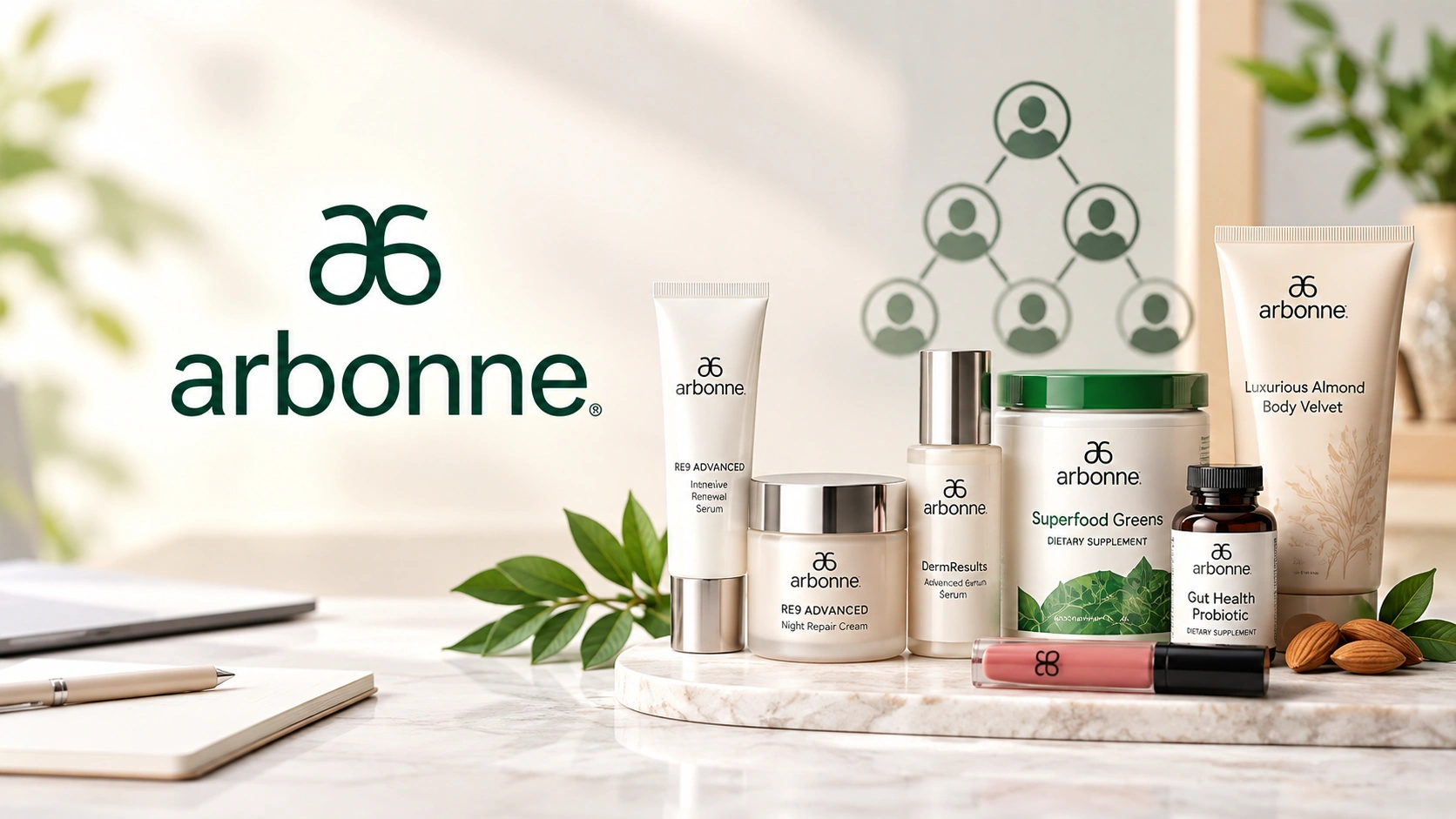
Arbonne is a top MLM health and wellness company that focuses on botanically based health and beauty products. Its product range includes skincare, makeup, nutritional supplements, and wellness programs like the 30 Days to Healthy Living challenge.
Arbonne compensation plan: Arbonne's compensation plan helps independent consultants earn retail profits along with bonuses based on personal and team sales volume. Higher ranks unlock commissions, leadership bonuses, and performance incentives.
Shaklee is a pioneer among network marketing health and wellness companies, known for producing natural health supplements and environmentally friendly household products. The company emphasizes scientific research, safety testing, and sustainability in its product development.
Shaklee compensation plan: Shaklee's compensation plan allows distributors to earn retail profits and bonuses based on sales performance. Leadership incentives and lifestyle rewards are available for distributors who build successful teams.
Isagenix
Headquarters
Gilbert, Arizona, USA
Founders
John Anderson, Jim Coover & Kathy Coover
Year Founded
2002
Company Size
Private company; employee count not publicly disclosed
2025 Revenue
$400 Million
Core Wellness Products
Meal replacement shakes, cleanse systems, protein bars
Key Achievement
Known for structured wellness programs like the 30-Day Weight Loss System
Isagenix is one of the top MLM health and wellness companies that focuses on nutritional systems designed for weight management, energy improvement and overall health. Its product range includes shakes, hydration drinks, cleanse support products and targeted supplements.
Isagenix compensation plan: Isagenix's compensation plan lets associates earn through retail sales and bonuses for enrolling new customers. The binary compensation structure provides cycle bonuses and leadership rewards as teams grow.
LifeVantage
Headquarters
Sandy, Utah, USA
Founder
Darren Jensen
Year Founded
2003
Company Size
Approximately 200 employees
2025 Revenue
$213 Million
Core Wellness Products
Protandim® supplements, skincare
Key Achievement
Focus on nutrigenomics and cellular health research
LifeVantage is a top health and wellness MLM company that develops supplements and skincare products designed to support healthy aging and cellular health. Its flagship product Protandim targets oxidative stress and promotes the body's natural antioxidant production.
LifeVantage compensation plan: LifeVantage's Evolve compensation plan enables consultants to earn sharing bonuses from new enrollments and personal sales commissions. Leadership match bonuses and level commissions provide additional long-term income opportunities.
Launch Your Wellness MLM with the Right Technology
Manage distributors, automate commissions and scale your MLM network with powerful software.
List of Top 10 MLM Health and Wellness Companies (2025)
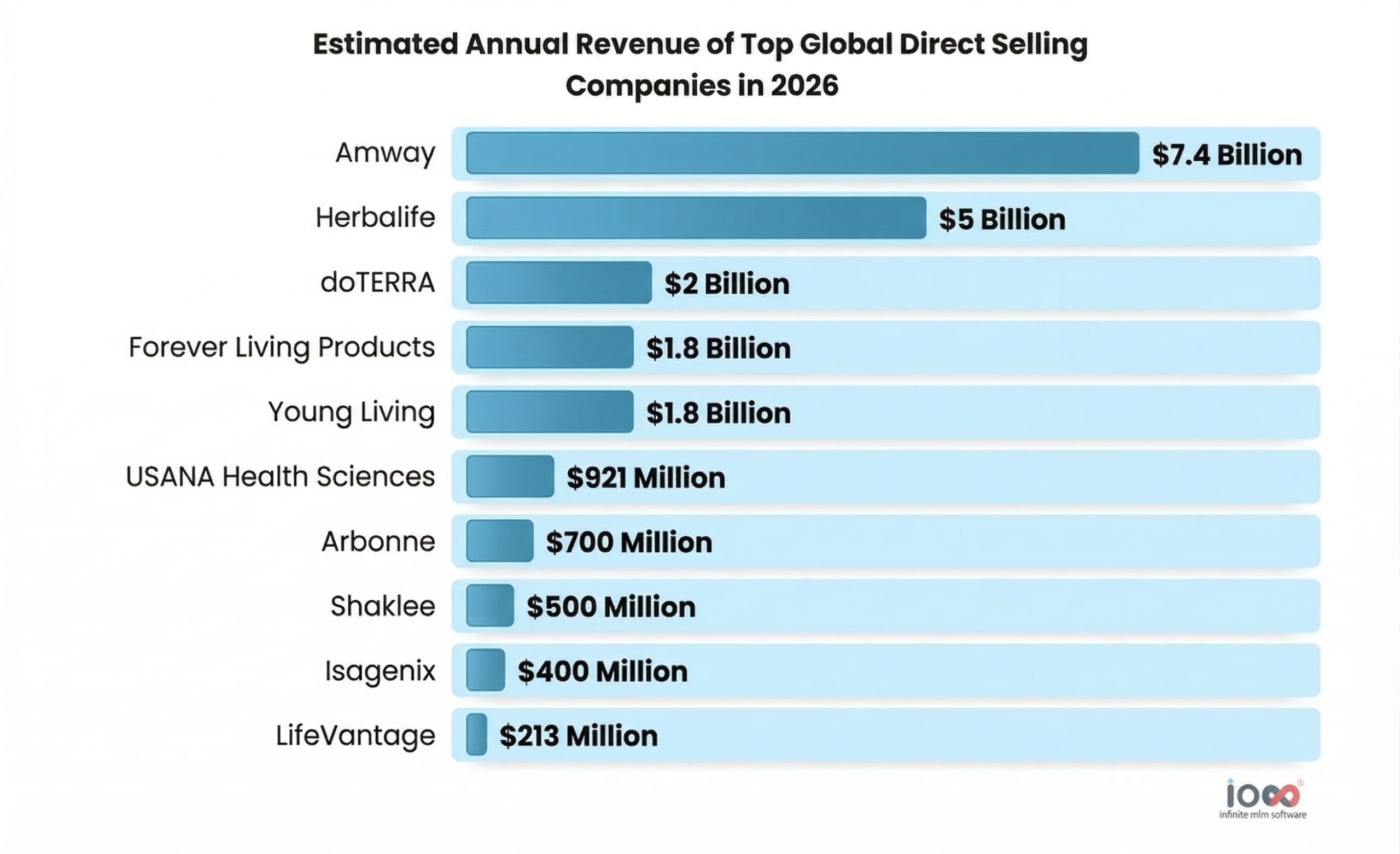
Here is a list of the top MLM health and wellness companies based on their 2025 revenue, country of origin, and their primary wellness focus areas.
Top 10 MLM health and wellness companies ranked by 2025 revenue
Rank
Company
Country
2025 Revenue
Core Wellness Focus
1
Amway
USA
$7.4 Billion
Nutrition & Cellular Health
2
Herbalife
USA
$5 Billion
Weight Management & Fitness
3
doTERRA
USA
$2 Billion
Essential Oils & Aromatherapy
4
Forever Living Products
USA
$1.8 Billion
Aloe-Based Wellness
5
Young Living
USA
$1.8 Billion
Holistic Health Oils
6
USANA Health Sciences
USA
$921 Million
Science-Backed Supplements
7
Arbonne
USA
$700 Million
Vegan Skincare & Detox
8
Shaklee
USA
$500 Million
Eco-Friendly Nutrition
9
Isagenix
USA
$400 Million
Cleansing & Intermittent Fasting
10
LifeVantage
USA
$213 Million
Nutrigenomics & Anti-Aging
$70 Billion+ in global direct selling revenue — and the health and wellness segment is leading the way.
Mega-Trends Shaping MLM Health & Wellness in 2026
MLM wellness companies are moving beyond basic vitamins and protein powders, embracing advanced, technology-driven solutions to meet modern consumer expectations. These trends are redefining product offerings, distributor strategies, and customer engagement.
Key trends shaping the industry include:
Nootropics & Mental Wellness
Supplements targeting focus, stress reduction, and cognitive performance are becoming top sellers as consumers prioritize mental clarity and productivity.
Personalized Nutrition
Companies are using DNA testing and microbiome analysis to create customized supplement plans, offering more precise health solutions tailored to individual genetics, metabolism, and lifestyle.
Digital Wellness Ecosystems
Physical products are increasingly paired with apps, AI-powered meal planners, and virtual coaching. Subscription-based ecosystems improve customer retention, enhance distributor engagement, and create predictable recurring revenue.
These innovations are helping MLM wellness brands stay competitive, deliver higher-value experiences, and strengthen long-term growth.
Challenges Faced by Top Health & Wellness MLM Companies and Solutions
Even the most successful MLM health and wellness companies face operational and regulatory challenges as they scale globally. Below are some of the most common issues and practical solutions used by industry leaders.
1
Regulatory Scrutiny
Issue: Many wellness MLM companies make unverified health or income claims, which can attract scrutiny from regulators like the U.S. Food and Drug Administration (FDA) and the Federal Trade Commission (FTC). This can lead to legal disputes, fines, or restrictions on certain products and marketing practices.
Solution: Maintain dedicated legal and compliance teams. Provide compliance training for distributors. Use claim approval systems to review product and income statements before publication.
2
Negative Public Perception
Issue: Network marketing health and wellness companies are sometimes associated with pyramid schemes due to recruitment-heavy compensation structures and low distributor success rates. This can affect brand trust and recruitment efforts.
Solution: Focus on customer-first sales models instead of recruitment. Highlight product quality, research, and real customer results. Promote transparent income disclosures and ethical marketing.
3
Distributor Turnover
Issue: High distributor churn is common in MLM companies. Many distributors leave due to unrealistic income expectations, limited sales skills or lack of support.
Solution: Provide structured training and onboarding programs. Offer sales tools, marketing templates, and coaching. Use mobile apps for distributor training and performance tracking.
4
Market Saturation
Issue: The health and wellness sector is highly competitive, especially in categories like weight loss supplements, essential oils, and nutrition products. Oversaturation can create competition between distributors within the same company.
Solution: Launch unique, science-backed wellness products. Use geo-targeted sales strategies. Implement lead protection systems to reduce internal competition.
5
Compliance and Monitoring Challenges
Issue: Managing thousands of independent distributors makes it difficult to control marketing claims and promotional content, increasing the risk of misleading advertising.
Solution: Deploy AI-powered monitoring tools to track distributor content. Require the use of pre-approved marketing materials. Implement centralized compliance dashboards for better oversight.
Direct Sales Health and Wellness Industry Statistics & Future of Direct Sales Health and Wellness Industry
The direct selling industry is experiencing rapid growth on a global scale, with projections indicating significant expansion in the coming years. By 2030, the market is expected to reach a revenue of approximately USD 328.26 billion. This growth is being driven by a steady compound annual growth rate (CAGR) of 6.4% from 2023 to 2030.
By 2030$328.26BProjected global direct selling market revenue
It is projected to grow at a compound annual growth rate (CAGR) of 7.3%, reaching approximately $8.99 trillion USD by 2028.
North America was the leading region in the global wellness market in 2023, contributing over $2.1 trillion USD.
Within North America, the United States had a larger wellness market than Canada. In 2022, the U.S. wellness industry exceeded Canada's market size by roughly $1.8 billion USD.
Top MLM Software Features for Health & Wellness Companies
Regulatory Compliance Tools
Ensures all product claims and marketing follow health regulations
Automated checks reduce legal risks and violations
Pre-approved templates guide compliant promotions
Audit trails track distributor activities for transparency
Region-based rules enforce compliance across markets
Product Certification Tracking
Manages certifications like organic, GMP, and vegan labels
Stores lab testing and quality documentation
Provides easy access for audits and verification
Builds customer trust through transparency
Strengthens brand credibility in regulated markets
Distributor Licensing Management
Tracks distributor licenses and certification validity
Ensures accurate, transparent, and timely auto-payouts
Best MLM Software for Health & Wellness
Choosing the right MLM software is critical for health and wellness businesses that need compliance, distributor training, and supplement catalog management. The table below compares Infinite MLM Software with ARM MLM and Freedom MLM to highlight key features for scaling a compliant wellness MLM.
Comparison of Infinite MLM Software, ARM MLM Software, and Freedom by ByDesign Technologies
Feature
Infinite MLM Software
ARM MLM Software
Freedom (ByDesign Technologies)
Supplement Catalog Limits
Unlimited with batch & expiry tracking
Supports product management but limited wellness-specific controls
Supports product catalog but not specialized for nutraceutical tracking
Infinite MLM Software stands out for compliance tools, certification tracking, and real-time inventory, making it the top choice for health-focused MLMs, while competitors provide general MLM functionality.
Build a Compliant, Scalable Wellness MLM Business
See how you can simplify operations while scaling your health & wellness business with confidence. Stay compliant, manage products effortlessly, and grow your network with ease.
The MLM health and wellness industry continues to grow as demand for preventive health, nutrition, and holistic wellness increases. Leading companies like Amway, Herbalife, doTERRA, and USANA Health Sciences have built strong global networks through quality wellness products and scalable direct selling models.
With trends like personalized nutrition and digital wellness platforms emerging, and the support of modern MLM software for network management, compliance and commission automation, the health and wellness MLM sector is set to remain a major force in the global direct selling industry.
FAQ
What makes MLM software suitable for health companies?+
MLM software for health companies is designed to handle strict regulations around wellness products. It includes compliance tools to control product claims, certification tracking to ensure distributors are trained, and inventory features like batch and expiry management. These capabilities help maintain product safety, traceability, and regulatory compliance.
How do you ensure compliance in wellness MLM?+
Compliance is ensured through systems that validate product claims, structured distributor training programs, and region-specific controls. These features help prevent misleading promotions, ensure ethical selling practices, and align operations with local health regulations.
Does Infinite MLM Software support health product catalogs?+
Yes, Infinite MLM Software supports a wide range of health products, including nutraceuticals, supplements, and skincare. It offers batch tracking, product categorization, and certification management, making it easier to maintain quality standards and ensure full compliance across the supply chain.
Which sector is the largest within the health and wellness industry?+
The personal care and beauty sector currently dominates the global health and wellness market in terms of revenue.
Which is the world's leading MLM wellness company?+
Herbalife is widely recognized as one of the leading companies in the global wellness MLM industry.
Which is the top MLM wellness company in India?+
Amway is one of the most popular and long-established MLM companies operating in India's wellness and nutrition market.
What is Make Wellness MLM?+
Make Wellness is an emerging company in the network marketing industry led by CEO Justin Prince. The company focuses on innovative health products, including bioactive peptide technology, and aims to build a strong presence in the wellness MLM sector.
Which is the No.1 nutrition company in the world?+
According to Euromonitor International, Herbalife Nutrition is ranked #1 globally in the weight management and wellbeing category.
What are pyramid scheme nutrition companies?+
Pyramid scheme nutrition companies are businesses that appear to use MLM structures but primarily earn profits from recruiting new distributors rather than from selling actual products.
Is multi-level marketing of nutrition supplements legal?+
Yes, MLM is a legal business model. However, ethical concerns can arise if companies promote unproven nutritional supplements or prioritize recruitment over genuine product sales.
Why are health and wellness products so popular in MLM?+
Health and wellness products often require education, lifestyle guidance, and personal recommendations. The MLM model allows distributors to act as wellness advisors, offering personalized support and sharing real-life experiences, which helps build trust and encourages long-term customer relationships.
Meet The Author
Pavanan Ghosh
Co-founder and Chief Marketing Officer at iOSS
A seasoned analyst with a passion for innovative marketing ideas and trends in software development, Artificial Intelligence, and Multi-Level Marketing trends. Specializes in spotting major trends at the intersection of multiple new technologies. Has years of experience planning and delivering compelling projects which combine two or more of these increasingly popular technologies.
Checkout Our 1M-User Network Demo!
Boost profits 10x times with Infinite MLM Software.
Looking for a certified, enterprise-ready platform with advanced features for your MLM business? Infinite MLM Software might just be the thing for you.
This website uses browser cookies to enhance your user experience and boost loading speeds but we never store any of your private data. By continuing you accept our privacy policy.