The biggest skincare MLM companies in 2026 are Amway, Natura &Co and Mary Kay, each selling more than $2 billion a year through independent sellers. Below are the 12 largest skincare-led MLM brands, ranked by 2025 revenue and compared on founding year, flagship skincare line and pay plan. We also cover the brands that closed or left the MLM model, and how to tell a skincare MLM from a pyramid scheme.
At a glance
Amway leads with $7.3B in 2025 revenue, though skincare (Artistry) is only one part of its sales.
Mary Kay ($2.4B) is the largest company here that sells beauty and skincare first.
Farmasi grew fastest, up 42% in 2025; Nu Skin fell the most, down 14%.
Beautycounter ended its seller model in 2024 and Avon's US business filed for bankruptcy the same year.
We left out Herbalife, Melaleuca, PM-International and Isagenix. They sell some skincare, but nutrition drives their revenue.
Top Skincare MLM Companies Compared
Ranked by 2025 revenue in US$ millions, from the Business For Home Top 500 (2026). "est." means the figure is an estimate rather than company-verified.
Note: "est." means Business For Home lists the figure as estimated rather than company-verified. The list is subject to change as companies report updated figures.
1. Amway
Amway is the largest MLM company in the world, founded in 1959 in Ada, Michigan, by Rich DeVos and Jay Van Andel. Its skincare sits under the Artistry brand, next to the Nutrilite supplements that bring in most of its sales. Amway reported $7.3 billion in revenue for 2025, down 1% from $7.4 billion in 2024.
Amway pays through a stair-step breakaway plan: sellers rank up by sales volume, then break away into their own independent group.
Founded: 1959, Ada, Michigan, USA
Skincare line: Artistry
Revenue 2025: $7.3B (verified)
2. Natura &Co (including Avon)
Natura &Co is a Brazilian beauty group founded by Luiz Seabra in São Paulo in 1969. It bought Avon in 2020, making it one of the largest beauty direct sellers in the world, with $4.35 billion in revenue for 2025 (up 4%). Natura is known for its sustainability reporting and Amazon-sourced ingredients. Its anti-ageing line is Chronos, while Avon's best-known skincare is Anew.
Avon's US business, Avon Products Inc., filed for Chapter 11 bankruptcy in August 2024. Avon still sells through independent representatives in many markets.
Mary Kay is the best-known skincare-and-makeup MLM, founded by Mary Kay Ash in Dallas in 1963 and now based in Addison, Texas. Its TimeWise skincare range is its best seller. Consultants buy at wholesale and keep the retail markup, then earn team commissions as they build a unit. Business For Home estimates its 2025 revenue at $2.4 billion, flat on 2024.
Forever Living, founded by Rex Maughan in 1978, builds its whole range around aloe vera. It grows its own aloe and uses it across drinks, supplements and a skincare line, which gives sellers a simple product story. Business For Home estimates its 2025 revenue at $1.7 billion.
Founded: 1978, Scottsdale, Arizona, USA
Skincare line: Aloe-based skincare
Revenue 2025: $1.7B (estimated)
5. Atomy
Atomy is a South Korean K-beauty MLM founded in 2009 by Park Han-gill. It competes on price, with no joining fee, and its Absolute CellActive skincare set is its flagship. Atomy reported $1.7 billion in revenue for 2025, down 7% from $1.83 billion.
Atomy pays through a binary plan, which suits a consumable product that customers reorder every month.
Founded: 2009, South Korea
Skincare line: Absolute CellActive
Revenue 2025: $1.7B (verified)
6. Nu Skin
Nu Skin, founded in Provo, Utah, in 1984, pairs skincare with beauty devices. Its ageLOC range and the LumiSpa facial device create repeat orders for replacement heads and treatment gels, which suits autoship. It also sells supplements under the Pharmanex brand. Nu Skin's revenue fell 14% to $1.49 billion in 2025, from $1.73 billion in 2024.
Founded: 1984, Provo, Utah, USA
Skincare line: ageLOC, LumiSpa
Revenue 2025: $1.49B (verified)
7. SeneGence
SeneGence was founded in 1999 by Joni Rogers-Kante and is based in Foothill Ranch, California. It is best known for LipSense long-wear lip colour, but also sells skincare built on its patented SenePlex+ complex. Distributors must buy at least $200 of product every six months to stay active. Business For Home estimates its 2025 revenue at $800 million.
Founded: 1999, Foothill Ranch, California, USA
Skincare line: SenePlex+ skincare
Revenue 2025: $800M (estimated)
8. Belcorp
Belcorp is a Peruvian beauty company founded in 1968 by Eduardo Belmont. It sells through three brands, L'Bel, Ésika and Cyzone, mainly across Latin America, with L'Bel carrying its premium skincare. Business For Home estimates its 2025 revenue at $780 million.
Founded: 1968, Lima, Peru
Skincare line: L'Bel
Revenue 2025: $780M (estimated)
9. Arbonne
Arbonne was founded in 1980 by Petter Mørck and is based in Irvine, California. It sells vegan, B Corp-certified skincare and nutrition, with RE9 Advanced as its anti-ageing line. Arbonne pays through a unilevel-style hybrid plan. Business For Home estimates its 2025 revenue at $700 million.
Oriflame was founded in Sweden in 1967 by brothers Jonas and Robert af Jochnick. It sells skincare, makeup and wellness products across Europe, Asia and Latin America, and Novage+ is its premium anti-ageing skincare line. Business For Home estimates its 2025 revenue at $653 million.
Founded: 1967, Sweden
Skincare line: Novage+
Revenue 2025: $653M (estimated)
11. Farmasi
Farmasi is a Turkish cosmetics company with roots going back to 1950. It sells affordable makeup and skincare, including its Dr. C. Tuna line, and has a low entry cost for new sellers. Farmasi is the fastest-growing company on this list: revenue rose 42% to $610 million in 2025.
Founded: 1950, Turkey
Skincare line: Dr. C. Tuna
Revenue 2025: $610M (verified)
12. RIMAN
RIMAN is a South Korean K-beauty company founded in 2018, making it the youngest brand on this list. Its IncellDerm skincare range drives most of its sales. Business For Home estimates its 2025 revenue at $545 million.
Founded: 2018, South Korea
Skincare line: IncellDerm
Revenue 2025: $545M (estimated)
How Big Is the Skincare MLM Market?
Global direct selling was worth about $163.9 billion in 2024, roughly flat on the year before, according to the World Federation of Direct Selling Associations (WFDSA). Cosmetics and personal care made up about a quarter of all direct selling in 2023, second only to wellness. In the US, direct selling reached about $34.7 billion in retail sales in 2024 through 12.2 million participants.
The 2025 numbers show where growth is going. Brands with a sharp product story, such as Farmasi's low-cost cosmetics, are growing, while older device- and catalogue-led brands like Nu Skin are shrinking.
Is a Skincare MLM a Pyramid Scheme?
Not by default. The difference is where the money comes from. A legitimate MLM pays commissions mainly on products sold to real customers. A pyramid scheme pays mainly for recruiting people, who often buy stock they never resell. The US Federal Trade Commission uses this retail-sales test.
Warning signs in any beauty MLM:
Income depends on recruiting rather than selling to customers
Large starter kits or monthly purchases required to stay "active"
No buy-back policy for unsold products
Income claims with no published income disclosure statement
How Skincare MLMs Pay Their Sellers
Most skincare MLMs combine a retail margin (the seller buys at wholesale and keeps the markup) with team bonuses on their downline's sales. The structure varies:
Multi-level / unilevel (Mary Kay, Arbonne, Oriflame): unlimited direct recruits, commissions paid down a set number of levels. See the unilevel plan.
Binary (Atomy): two legs, paid on the weaker leg's volume. See the binary plan.
Stair-step breakaway (Amway): rank up by volume, then break away into an independent group. See the stair-step plan.
Hybrid (Natura, Avon): a retail-margin model with some team bonuses. See the hybrid plan.
Skincare is reordered every month, so plans that reward repeat customer orders (autoship, loyalty programmes) tend to work better than plans built on one-off starter-kit sales. You can model any of these with our MLM plan calculator.
Skincare MLMs That Closed or Changed Model
Company
What Changed
When
Beautycounter
Ended its independent advocate model, cutting ties with about 65,000 sellers
April 2024
Avon Products Inc. (US)
Filed for Chapter 11 bankruptcy
August 2024
Rodan + Fields
Moved away from the MLM consultant model
2024
A big name does not guarantee the seller model survives. Check a company's recent news before joining.
World Federation of Direct Selling Associations (WFDSA), Global Direct Selling Report 2024
US Direct Selling Association, industry statistics 2024
US Federal Trade Commission, Business Guidance Concerning Multi-Level Marketing
Company websites for each company listed
Frequently Asked Questions
Amway is the largest, with $7.3 billion in 2025 revenue, though skincare (Artistry) is only part of its sales. Among companies that lead with beauty and skincare, Natura &Co ($4.35 billion) and Mary Kay ($2.4 billion) are the largest.
Not by default. A legal MLM pays mainly on products sold to real customers; a pyramid scheme pays mainly for recruiting. Watch for heavy starter-kit purchases, monthly buying to stay active and no buy-back policy.
If you like Arbonne's clean, vegan positioning, look at Natura &Co (sustainability-led) and Oriflame (Swedish, skincare-led). For anti-ageing skincare, Nu Skin and Atomy are the closest matches.
Avon still sells through independent representatives and is owned by Natura &Co. Its US business, Avon Products Inc., filed for Chapter 11 in August 2024. Read our Avon MLM review.
By 2025 revenue, the largest beauty-led direct sellers are Natura &Co ($4.35 billion), Mary Kay ($2.4 billion), Atomy ($1.7 billion) and Nu Skin ($1.49 billion).
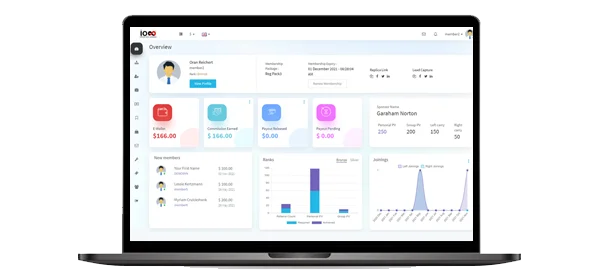
Most run a dedicated MLM platform that handles the compensation plan, commissions, autoship reorders, e-commerce and distributor back offices in one system. Infinite MLM Software supports every plan type on this list, and you can try the free demo.
Meet The Author
Pavanan Ghosh
Co-founder and Chief Marketing Officer at iOSS
A seasoned analyst with a passion for innovative marketing ideas and trends in software development, Artificial Intelligence, and Multi-Level Marketing trends. Specializes in spotting major trends at the intersection of multiple new technologies. Has years of experience planning and delivering compelling projects which combine two or more of these increasingly popular technologies.
Checkout Our 1M-User Network Demo!
Boost profits 10x times with Infinite MLM Software.
Looking for a certified, enterprise-ready platform with advanced features for your MLM business? Infinite MLM Software might just be the thing for you.
This website uses browser cookies to enhance your user experience and boost loading speeds but we never store any of your private data. By continuing you accept our privacy policy.