
MLM Opportunity Evaluation in 2026: What You Need to Know


Multi-level marketing (MLM) continues to attract people seeking flexible work, extra income, or the opportunity to build a long-term business outside traditional employment. In 2026, this appeal is even stronger, fueled by remote work culture, social selling and digital platforms that enable faster reach and growth.
At the same time, the industry includes high-risk models that rely more on hype than real value. The real challenge today isn’t finding an MLM opportunity, but evaluating whether it’s truly worth your time, money and effort. This blog is designed to help you assess an MLM opportunity objectively. Instead of emotional decisions or promotional promises, it focuses on financial transparency, product viability, ethical structure, technology and the role of reliable MLM software. By the end, you’ll know how to distinguish sustainable MLM businesses from costly mistakes.
Multi-level marketing is a sales model where independent distributors earn income by selling products directly to customers and by building a team of other distributors. Earnings come from personal sales as well as commissions generated by the sales of their network, often called a downline.
When structured properly, network marketing functions as a legitimate direct-selling business focused on retail sales. When it relies too heavily on recruitment, it becomes unstable and risky, making careful evaluation essential.
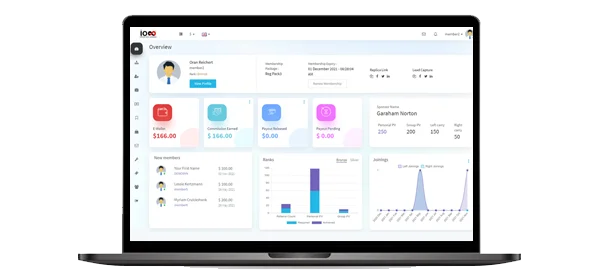
See how modern MLM software brings clear earnings, distributor visibility, and real-time insights into one dashboard.
Book a Product DemoWhen evaluating an MLM opportunity, the first thing to determine is whether the company earns primarily from product sales to real customers or from recruiting new distributors. A legitimate MLM depends on retail demand, not endless enrollment. If income exists mainly because new people keep joining, the structure becomes unstable and risky over time.
To better understand this distinction, it’s important to clearly separate ethical MLM models from illegal pyramid schemes. If you’re unsure where that line is drawn, we recommend reviewing our detailed guide on MLM vs. Pyramid Scheme, which breaks down the legal, structural and financial difference.
Understanding the true financial picture is critical before joining any MLM. This means reviewing actual earnings data, identifying all required costs and verifying that financial policies are transparent and fai. Legitimate companies are open about earnings, expenses and the realities most distributors face.
A strong refund or buyback policy protects distributors from unnecessary financial loss and shows the company values sustainability over short-term sales. Companies that push large inventory purchases without clear refund terms often shift risk onto distributor.
No MLM opportunity succeeds long-term without products that genuinely meet market demand. The product should stand on its own merit, with pricing and quality that make sense to everyday consumer.
Before committing your time or money, it’s important to research the company’s background and leadership. A solid reputation and experienced leadership often indicate long-term stability and regulatory awareness.
Strong training and support systems help distributors grow responsibly and sustainably. The company culture should emphasize skill-building, compliance and long-term customer relationships rather than hype or pressure.
To truly benefit from strong training, support, and culture, companies must also focus on keeping distributors engaged over the long term. For a deeper look at the strategies and tools that help maintain motivation, improve engagement, and lower attrition, explore this detailed guide on reducing distributor churn.
In 2026, technology is a major indicator of trust and professionalism. Transparent systems allow distributors to clearly understand their performance, commissions and team structured.
Before making a final decision, look beyond official presentations and marketing materials. Real clarity comes from conversations with people who are currently involved or who have already walked away. Consistent patterns in feedback are far more reliable than isolated success stories. A trustworthy MLM opportunity feels transparent, pressure-free and aligned with what the company publicly claims.
Use this checklist to evaluate what you fin:
If several of these points raise concerns, that’s a strong signal to pause or walk away. In MLM, transparency and balance are non-negotiable. Any opportunity that relies on pressure, hype, or secrecy rarely leads to sustainable success.
Yes, but only when it’s built on the right foundation. Modern MLM success no longer comes from hype or aggressive recruitment. It comes from structure, transparency, and real customer value. Successful MLM opportunities in 2026 ar:
As regulations tighten and consumers become more informed, trust has become the real currency in MLM. Companies that invest in strong systems, data visibility, compliance, and distributor support can still succeed while hype-driven models continue to fade out.
Discover flexible pricing that supports transparency, automation and distributor confidence.
View Plans & PricingA legitimate MLM generates most of its revenue from retail product sales to real customers, not from recruiting new distributors. It provides transparent documentation such as an Income Disclosure Statement, clear refund policies, and fair compensation plans. If earnings depend mainly on recruitment fees or mandatory inventory purchases, it may be operating as a pyramid-style model.
An Income Disclosure Statement shows what distributors actually earn, based on real company data. It’s important because it sets realistic expectations and helps you understand how many participants make a profit, break even, or lose money. Always focus on median income rather than averages, as averages are often skewed by a small number of top earners.
Costs vary by company but often include a starter kit, initial product purchases, and optional marketing or training tools. Some MLMs also require monthly purchases to remain active. Before joining, make sure all upfront and ongoing costs are clearly explained and affordable within your budget.
A clear refund or buyback policy protects distributors from financial loss, especially if products don’t sell as expected. Reputable MLM companies typically allow distributors to return unsold inventory within a specific timeframe, often offering a buyback of around 90%. Lack of a refund policy is a major red flag.
Ask whether the product solves a real problem, is competitively priced, and would still sell without an income opportunity attached. Compare pricing with Amazon, retail stores, or direct-to-consumer brands. Strong MLM products can stand on their own without relying on distributor incentives.
Very important. Modern MLM companies use reliable MLM software to provide real-time sales tracking, transparent commission calculations, genealogy visibility, and mobile access. Poor or manual systems often lead to confusion, delayed payouts, and lack of trust.
Yes. Current distributors can share realistic expectations around workload and earnings, while former distributors often provide honest insight into challenges or reasons for leaving. Consistent patterns in feedback matter more than isolated success stories.
Major red flags include promises of guaranteed or easy income, pressure to join immediately, mandatory large inventory purchases, missing Income Disclosure Statements, unclear refund policies, and an excessive focus on recruitment over product sales.
There is no fixed timeline. Most distributors earn modest amounts initially, and meaningful income typically requires consistent effort over months or years. Any company promising fast or passive income without work should be approached with caution.
Compliance ensures the company follows legal guidelines around income claims, product marketing, refunds, and distributor conduct. Companies that invest in compliance and transparent systems are more likely to be sustainable and protect distributors from regulatory risk.
Co-founder and Chief Marketing Officer at iOSS

Looking for a certified, enterprise-ready platform with advanced features for your MLM business? Infinite MLM Software might just be the thing for you.
Connect with Us