
Guide to Multilevel Marketing (MLM) Software Development


With over 100 million people globally participating in network marketing, the need for efficient systems to manage distributors, commissions, and operations is more critical than ever. According to a report by Statista, the global MLM industry is valued at $189.6 billion in 2023, highlighting the substantial scale of MLM businesses worldwide.
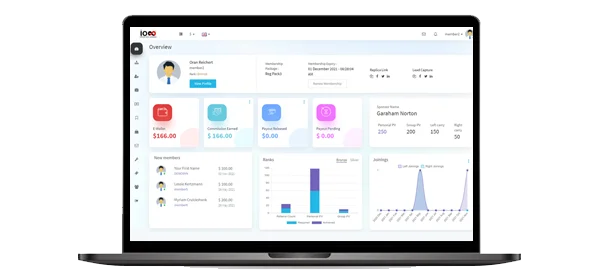
To effectively manage these large-scale operations, companies rely on MLM software, specialized tools that automate core functions such as distributor management, commission tracking, and reporting.
In 2026, building an MLM system isn't just about features; it's about avoiding technical debt and ensuring the architecture can handle millions of real-time commission calculations. This guide will explore the fundamentals of MLM software development, discussing its benefits, key features, the development process, and how to select the right development partner.
MLM software is a specialized tool designed to automate and simplify the functions of an MLM business. MLM businesses involve recruiting distributors who not only sell products but also build teams of other distributors, creating a network of commissions and sales across multiple levels. MLM software development simplifies the complexity of managing these networks by automating key processes such as distributor management, sales tracking, commission calculations, and more.
For example, managing a large group of distributors manually can lead to confusion and errors when tracking sales and calculating commissions. It would be time-consuming to handle hundreds of transactions manually. With MLM software, however, sales and commissions are tracked automatically, making the process much faster, more accurate, and eliminating the confusion that comes with traditional methods.
By using technology, MLM software helps businesses run more smoothly and efficiently, providing essential functions that are necessary for the day-to-day operations of a network marketing company.
Effective distributor management is the backbone of any MLM business. MLM software organizes all key data points, registration details, earnings, rank status, and network hierarchy, into one centralized system. It also simplifies onboarding by giving new distributors immediate access to the training, tools, and documents they need. Properly developed software ensures that data is both accurate and accessible, reducing manual work and improving team coordination.
Sales data fuels decision-making. MLM software tracks every transaction across the distributor network, from product purchases to repeat orders. This data helps identify which products are performing, where sales are lagging, and who your top performers are. As part of MLM software development, tracking tools can be designed to deliver real-time metrics and filtered reports that align with business goals. This level of visibility helps companies react faster and plan smarter.
Few things matter more in MLM than paying distributors accurately and on time. MLM software calculates commissions based on the chosen compensation mode: binary, matrix, unilevel, or hybrid. It handles multi-level, rule-based payouts with consistency and speed. When tailored through MLM software development, the commission engine becomes fully aligned with your structure and scalable as the network grows.
Clear reporting drives accountability and growth. MLM software provides a real-time view of sales performance, team expansion, and commission flows. Reports are configurable and can be generated at the distributor, team, or admin level. With custom MLM software development, these reporting tools can be built to match specific KPIs, helping leadership make informed decisions backed by reliable data.
MLM software development isn't just about building features, it's about solving operational problems and enabling sustainable growth. With the right system in place, business owners can spend less time managing complexity and more time focused on scaling the network.
In today's fast-paced and competitive MLM landscape, manual processes are no longer sufficient to keep up with the growing demands of a business. MLM software plays a pivotal role in increasing operational efficiency and reducing errors.
By automating many tasks like commission calculations, payments, and distributor management MLM software significantly speeds up workflows, saving both time and resources. Automation allows businesses to scale operations without having to constantly hire additional staff.
Manual calculations and processes are prone to human error, especially in complex commission & bonus structures. MLM software eliminates this risk by providing accurate and consistent calculations, ensuring distributors are paid correctly and promptly.
MLM software ensures that the entire process, from sales tracking to commission distribution, is transparent. Distributors can see exactly how their commissions are calculated and when they will be paid, fostering trust within the network.
As an MLM business grows, so does the need to manage a larger distributor base, track more sales, and process more payments. MLM software is designed to scale with the business, allowing for expansion without compromising efficiency or accuracy.
Many countries have strict regulations governing MLM businesses, including laws related to commissions, product sales, and business practices. MLM software helps businesses stay compliant by ensuring accurate reporting and transactions, as well as tracking distributor activity.
A modern MLM platform is designed to manage complex distributor networks, automate financial workflows, and maintain operational accuracy at scale. Each feature is engineered to support high transaction volumes, real-time visibility, and long-term system stability as the network expands. Some of the most important features include:
The platform provides a structured onboarding framework that allows new distributors to register, verify credentials, and manage profile information within a centralized environment. Validation rules, role assignment logic, and data consistency controls ensure reliable member records and scalable user management as the network grows.
The genealogy system delivers a real-time visual representation of the entire network hierarchy, enabling users to track uplines, downlines, and organizational relationships with clarity. Advanced rendering architecture supports extremely large network structures and ensures responsive performance even when visualizing tens of thousands of nodes simultaneously.
Flexible placement configuration allows administrators to define how new members enter the network using rule-based automation or manual assignment. The placement engine evaluates structural conditions and compensation alignment to ensure consistent positioning across expanding network layers.
The platform supports diverse compensation structures including Binary, Unilevel, Matrix, Hybrid-plan models through configurable rule engines. This flexibility enables organizations to implement complex incentive strategies while maintaining consistent calculation logic across the entire distributor network.
Automated commission calculation is executed through rule-driven financial engines that evaluate sales activity, rank qualifications, and hierarchical relationships in real time. The processing framework maintains payout accuracy and consistency even under heavy transaction loads and simultaneous calculation cycles.
Automated payout workflows manage commission distribution across multiple payment channels with scheduled processing controls and approval mechanisms. Financial transaction tracking and reconciliation capabilities ensure transparency, audit readiness, and operational reliability.
Centralized product administration enables businesses to manage catalogs, pricing structures, categories, and inventory levels within a unified system. Built-in inventory management controls track stock movement, update availability in real time, and maintain synchronization between inventory status and sales activity across integrated platforms.
The system manages the full order lifecycle from purchase initiation to fulfillment, including shipment tracking, return processing, and transaction history maintenance. Structured order data supports reporting accuracy and operational visibility.
Seamless connectivity with major eCommerce platforms enables synchronization of product data, customer records, and transaction information. Integration architecture ensures consistent workflows across digital sales channels without operational duplication. Smoothly connect with popular eCommerce platforms like Shopify, Woocommerce, or Magento for smooth online sales operations.
Integrated email and SMS communication tools within the MLM software enable targeted messaging, promotional outreach, and system-wide announcements through centralized campaign controls. Delivery scheduling, audience segmentation, and message tracking support structured distributor communication across the network marketing platform.
Automated system notifications deliver real-time alerts via in-app messages, email, and SMS for commissions, payouts, rank progression, and critical platform activities. Event-driven alert logic ensures timely distributor updates while maintaining communication consistency across the MLM system.
Secure internal messaging within the MLM software enables structured communication between administrators and distributors in a protected environment. Conversation tracking, access controls, and communication records support coordinated operations alongside email and SMS-based distributor engagement.
Advanced reporting tools within the MLM software provide structured insights into product performance, distributor activity, and regional sales trends across the network marketing platform. Configurable reporting parameters, real-time data processing, and export-ready formats support operational monitoring, forecasting, and data-driven strategic planning.
Financial reporting modules track automated commission calculations, payout distribution, adjustments, and pending transactions across the distributor network. Structured financial data outputs support auditing requirements, transparency in earnings distribution, and consistent financial monitoring within the MLM system.
Performance dashboards evaluate recruitment activity, rank progression, sales contribution, and team growth across multiple network levels. Data visualization tools and filtered performance metrics provide clear insight into organizational development and distributor engagement patterns.
Built-in email marketing tools within the MLM software enable businesses to design, schedule, and automate targeted email campaigns based on behavioral triggers and segmentation logic. Automated communication workflows support consistent distributor engagement, promotional outreach, and structured marketing automation within the network marketing platform.
Centralized campaign management tools allow administrators to plan, schedule, and monitor promotional content across major social media platforms. Integrated tracking mechanisms measure engagement metrics and campaign effectiveness while maintaining consistent brand communication across distributor networks.
Lead capture systems collect, organize, and track prospect data from landing pages, marketing campaigns, and digital channels. Structured lead management workflows support nurturing processes, follow-up automation, and conversion tracking within the MLM business environment.
Native mobile applications for Android and iOS provide full access to MLM software dashboards, distributor management tools, and performance metrics. Mobile architecture ensures consistent functionality, secure data access, and reliable system interaction across devices and operating environments.
Real-time mobile access enables distributors and administrators to manage accounts, monitor earnings, track orders, and review performance metrics from any location. Secure authentication protocols and synchronized data environments maintain operational continuity across the network marketing platform.
Instant push notifications deliver updates on transactions, commissions, registrations, and system activity directly to mobile devices. Event-triggered alerts support timely engagement, operational awareness, and responsive communication across the distributor network.
Sensitive personal, operational, and financial data is protected through advanced encryption protocols that secure information during storage and transmission. Security architecture within the MLM software safeguards system integrity, protects user privacy, and supports regulatory compliance standards.
Permission-based access frameworks regulate system interaction according to defined user roles such as administrator, distributor, and support staff. Controlled data visibility and authorization management ensure operational security and structured access governance.
Comprehensive activity logging records system interactions, financial transactions, configuration updates, and user actions across the platform. Detailed audit records support compliance requirements, operational transparency, and accountability across MLM business operations.
Secure integration with major payment gateways such as PayPal, Stripe, and Razorpay enables reliable transaction processing across multiple currencies and regions. Financial connectivity supports consistent commission payouts, order processing, and automated payment workflows within the MLM platform.
Data synchronization with CRM and ERP systems enables unified customer management, distributor tracking, and operational coordination across business functions. Integration reduces manual data handling and supports consistent workflow automation.
Extensible API integration allows businesses to connect external tools, applications, and custom services to the MLM software ecosystem. Structured third-party service integration supports scalability, feature expansion, data synchronization, and long-term system adaptability across the network marketing platform.
Developing MLM software involves several structured stages to ensure the final product meets all business requirements. From initial planning to post-launch maintenance, each phase plays a crucial role in building a successful software system. Below is a breakdown of the key phases involved in MLM software development:
This initial phase is critical for understanding the client's unique business needs. It involves analyzing the MLM company's structure, compensation plan, target user base, and specific functional requirements. A comprehensive scope document is created, outlining the system architecture, core features, third-party integrations, compliance requirements, and timeline expectations.
Once the requirements are approved, the project moves into the planning and design phase. Here, the MLM software architecture is mapped out, including the database schema, server infrastructure, and security protocols. UX/UI designers create intuitive layouts and interfaces that cater to both admins and distributors.
This is the core execution phase of MLM software development, where front-end and back-end developers bring the design and features to life. Using technologies like PHP, Node.js, React, or Laravel, the team builds modules for distributor management, commission calculation, e-commerce integration, genealogy visualization, and more.
Before launch, rigorous testing is performed to ensure the software is fully functional and error-free. QA engineers carry out unit testing, integration testing, system testing, and user acceptance testing (UAT). Special attention is given to performance under load, security vulnerabilities, and the accuracy of commission calculations.
After successful testing, the MLM software is prepared for deployment. The development team configures the live environment, sets up production databases, integrates third-party services and deploys the application on a secure server. Final verifications are conducted to ensure a smooth and bug-free launch.
MLM software development doesn't end at launch. Continuous maintenance ensures the platform remains up-to-date, secure, and aligned with evolving business needs. This includes fixing bugs, improving performance, updating compliance policies, and rolling out new features. Ongoing technical support is provided to assist users with system navigation, troubleshooting, and training.
Modern MLM platforms are built on scalable, high-performance technologies that support real-time processing, financial accuracy, and secure network operations. The following core technology stack reflects industry-standard frameworks and infrastructure used to develop reliable, enterprise-grade MLM software systems.
| Component | Industry Standard (2026) | Benefit |
|---|---|---|
| Backend | Node.js / Laravel | High-speed processing |
| Frontend | React.js / Flutter | Seamless mobile experience |
| Database | PostgreSQL / Redis | Financial data integrity |
| Security | AES-256 Encryption | GDPR & PCI-DSS Compliance |
Effective distributor management is the foundation of every successful MLM business. MLM software centralizes all essential data into one organized system. It simplifies onboarding by giving new members instant access to training materials, documents, and tools they need to succeed.
Sales data is critical for informed decision-making. MLM software tracks all transactions across the network providing real-time insights into product performance and distributor activity. With filtered reports and performance dashboards, businesses can quickly identify top performers, spot sales trends, and address underperforming areas.
Timely and precise commission payouts are key to maintaining distributor satisfaction and motivation. MLM software automates commission calculations based on the company's chosen compensation plan, whether it's binary, unilevel, matrix, or a hybrid model.
Reliable reporting tools are vital for transparency and accountability. MLM software delivers real-time reports on sales, recruitment, team growth, and commission distribution. Reports can be configured for distributors, team leaders, or admin users, providing insights at every level.
By automating many tasks like commission calculations, payments, and distributor management MLM software significantly speeds up workflows, saving both time and resources.
Manual calculations and processes are prone to human error, especially in complex commission & bonus structures. MLM software eliminates this risk by providing accurate and consistent calculations, ensuring distributors are paid correctly and promptly.
MLM software ensures that the entire process from sales tracking to commission distribution, is transparent. Distributors can see exactly how their commissions are calculated and when they will be paid, fostering trust within the network.
As an MLM business grows, so does the need to manage a larger distributor base, track more sales, and process more payments. MLM software is designed to scale with the business, allowing for expansion without compromising efficiency or accuracy.
Many countries have strict regulations governing MLM businesses, including laws related to commissions, product sales, and business practices. MLM software helps businesses stay compliant by ensuring accurate reporting and transactions, as well as tracking distributor activity.
Building a successful referral or multi-level marketing business demands the right technology, expertly developed and maintained. Partnering with an MLM software development company allows you to focus on growing your business while leaving the technical complexities to professionals.
MLM software development companies specialize in the unique needs of the network marketing industry. They understand how different compensation structures work and can customize a solution that aligns perfectly with your business model.
Unlike ready-made platforms, custom MLM software is designed to evolve with your business. As your network grows and your needs become more complex, the software can be adapted to:
The partnership with an MLM software development company doesn't end once the software is launched. A reliable provider offers ongoing maintenance and updates, regular security patches, and dedicated technical support to ensure smooth operation. This continuous service helps keep your system secure, up to date, and fully functional.
By entrusting the technical side to experts, you eliminate the stress of managing complex technology on your own and can focus entirely on growing your business.
When selecting the right MLM software provider, it's crucial to choose a partner who can meet your specific business needs and help you navigate the complexities of network marketing. A strong MLM software provider will offer a tailored solution that aligns with your business model, ensures scalability, and supports long-term growth. To make an informed decision, consider the following key elements:
Choose a software provider with a proven track record in developing MLM solutions. Their deep understanding of network marketing systems ensures they can build software that not only meets your immediate needs but can also anticipate and address potential challenges. A team with experience in MLM system development will offer valuable insights into your business's unique requirements, helping you create a system that works for you now and into the future.
Your MLM system needs to be tailored to fit your specific business needs and brand. Opt for a provider who offers high levels of customization and flexibility to ensure the software supports your unique compensation plan, product offerings, and marketing strategies. A customizable system allows for easier updates and growth as your business evolves.
Choose a provider that offers ongoing support and maintenance services. Regular updates and technical assistance are necessary to ensure the software remains functional, secure, and aligned with your evolving business needs. A provider who offers complete support will ensure the long-term success of your system.
When assessing an MLM software provider, look for essential features like order processing, downline management, compensation plan administration, and reporting tools. The software should provide a complete suite of functionalities that meet both your current and future business requirements.
Your MLM software should easily integrate with other critical tools, such as e-commerce platforms, CRM systems, and accounting software. A flexible provider will ensure that the software works smoothly with the rest of your technology ecosystem, enabling simplified operations and better data management.
Ensure that the MLM software provider uses the latest, secure technologies to ensure that your system is scalable, reliable, and up-to-date. The choice of technology stack is crucial in ensuring that the software can handle growing traffic and transactions without compromising performance.
Evaluate the scalability of the software to ensure that it can handle increasing numbers of users, transactions, and data. A reliable MLM software provider will offer solutions that can expand with your business, ensuring continuous performance without any disruptions.
A good MLM software provider must comply with industry regulations and standards to ensure the security and privacy of your business and customer data. Make sure the provider follows best practices regarding data protection and complies with legal and security standards.
The success of your MLM software is often determined by how easily your users can navigate and interact with it. Choose a provider who prioritizes user experience. Additionally, ensure that the software is mobile-accessible, as many users prefer to manage their operations on-the-go.
A MLM software provider should offer thorough implementation support, including data migration, user training, and guidance throughout the deployment process. This ensures that your team is well-equipped to use the software effectively and that the transition to the new system is smooth.
When selecting an MLM software provider, reputation matters. Look for providers with a history of successful implementations and long-term client relationships, positive reviews on platforms such as Capterra, G2, Trustpilot, and Software Advice etc.
Before committing to an MLM software, it's essential to test the product through a live demo or free trial. A hands-on experience gives you a clear understanding of how core functionalities work, how compatible the software is to your operational workflows.
Choose a compensation plan (Binary, Matrix, Unilevel, Hybrid, or Custom) that aligns with your business goals, and clearly define commission structures, bonuses, rank achievements, and payout schedules. Assess critical features like member registration, e-wallet systems, multi-currency support, and real-time reporting needs.
Carefully evaluate potential software providers based on their experience in the industry, ability to customize the system, security standards, and scalability for future growth. Request demos, case studies, and reviews to ensure the provider meets your specific requirements and offers strong post-sale support.
Work with the software provider to align the platform with your branding, including logos, color schemes, and product catalogs. Ensure the software integrates smoothly with essential tools like payment gateways, CRM systems, and email marketing platforms to create a smooth experience for distributors and admins.
Perform extensive end-to-end testing to ensure that all features, such as registration flows, commission calculations, and payout processing, work correctly. Conduct security vulnerability testing and involve stakeholders for beta testing to gather feedback and make necessary adjustments before going live.
Draft a complete implementation plan that includes a project timeline, resource allocation, data migration approach, user training schedules, and testing protocols. Engage key stakeholders early on to ensure smooth coordination and support throughout the process.
Ensure that existing data is accurate, clean, and ready for migration to the new system. Check the technical infrastructure to ensure that hardware and network capabilities are adequate to handle the software and that deployment can proceed smoothly without delays.
Create an extensive training program for staff and distributors, including tutorial videos, onboarding sessions, and webinars. Implement a change management strategy to support user adoption, address concerns, and facilitate the transition to the new system.
Start with a soft launch to a limited user base to test the system's functionality in a real-world setting. Monitor user engagement, system performance, and feedback to identify and resolve issues before rolling out to a larger audience.
Continuously monitor software performance and gather feedback to make ongoing improvements. Regularly analyze key performance metrics like recruitment, sales, and payout efficiency, and ensure that the software provider offers timely updates and support to keep the system running smoothly.
Maintain an ongoing relationship with your software provider to ensure regular system updates, security patches, and feature enhancements. As your business grows, adapt your compensation plan and business rules to align with market changes and ensure continued success.
Developing MLM software comes with challenges, such as navigating regulatory requirements and ensuring data security. Recognizing these potential issues helps you address them effectively and build a successful system.
Complying with various regulations across different countries can be complex. MLM software must meet legal standards for commissions, taxation, and data privacy to prevent legal issues and fines.
Protecting sensitive customer and financial information is a priority. Advanced security measures must be implemented to prevent breaches, cyberattacks, and unauthorized access, ensuring that both customer data and business operations remain safe.
Integrating MLM software with other business systems, such as e-commerce platforms or CRM software, is crucial for smooth data flow and minimizing duplication. Ensuring compatibility helps optimize business functions and prevents disruptions.
Introducing new software can face resistance from users who are used to existing systems. Proper training, user-friendly designs, and ongoing support are essential to encourage adoption and ensure long-term engagement with the new software.
In conclusion, MLM software development is crucial for managing modern multi-level marketing businesses. With the right software, MLM companies can automate critical tasks like distributor management, commission tracking, and reporting.
By understanding the key features, benefits, and challenges, businesses can make informed decisions about developing custom MLM software. It's essential to choose the right development partner to ensure that the software is secure, scalable, and aligned to your unique needs, ultimately setting your MLM business up for long-term success.
Product Specialist & Research Head

Are you on the lookout for a cost-effective software solution with advanced features for your MLM business? Infinite MLM software might just be the thing for you.
Connect with Us