
Can Your Existing Business Support an MLM Model? 10 Questions to Ask Before You Start


Adding an MLM model can be a smart way to grow your existing business, but success depends on more than recruiting distributors. It requires the right products, pricing, operations, compliance, and MLM software to support your network.
Before making the transition, use this 10-question checklist to evaluate your business readiness. It will help you identify whether your business has the foundation needed to build a sustainable and successful MLM business.
Readiness Checklist
Work through each question honestly. Together, they reveal whether your product, operations, and organization have the foundation to support a distributor network.
A successful MLM business depends on repeat purchases rather than one-time sales. Distributors earn more when customers continue buying products regularly, creating consistent revenue for both the business and the network.
Products that work well in MLM are usually consumable, replaceable, or subscription-friendly. Categories such as makeup, skincare, health & wellness, household essentials, and nutritional products naturally encourage repeat orders.
As you evaluate your product, consider the following:
If your product encourages recurring purchases and generates healthy margins, it is well positioned to support an MLM business model.
An MLM business shares a portion of every sale with distributors through commissions and bonuses. If your current profit margins are already low, sustaining these payouts can become difficult without increasing prices or reducing product quality.
Before introducing an MLM model, review your cost structure to ensure your business can remain profitable while rewarding distributors.
As you evaluate your margins, consider the following:
Healthy profit margins are essential for building a sustainable MLM business.
Unlike traditional retail, MLM order volumes can change quickly based on distributor activity, promotions, and product launches. Your supply chain should be prepared to handle these fluctuations without affecting customer satisfaction.
A reliable inventory and fulfillment process helps distributors sell with confidence and keeps customers coming back.
As you assess your operations, consider the following:
A flexible supply chain helps support long-term business growth.
MLM regulations vary from one country to another, and in some cases, even by state or province. Understanding these requirements before launching helps protect your business from legal issues and builds trust with distributors and customers.
Compliance should be part of your business strategy from the very beginning. Taking the time to understand local laws can help you avoid costly mistakes and support long-term growth.
As you prepare for expansion, consider the following:
A compliant business creates a stronger foundation for sustainable growth.
Your compensation plan is one of the most important parts of an MLM business. It should motivate distributors while remaining financially sustainable for the company. A plan that looks attractive initially may become difficult to maintain if payouts are not carefully planned.
The goal is to reward performance without affecting your long-term profitability.
As you build your compensation plan, consider the following:
A sustainable compensation plan supports both distributor success and business stability.
A compelling brand story helps attract motivated distributors and build lasting customer relationships.
Supporting distributors is different from supporting customers. Beyond answering questions, distributors need onboarding, product training, marketing materials, and regular guidance to help them grow their business.
As your network expands, your team should be ready to provide consistent support and build strong relationships with distributors.
Consider the following:
Strong support helps improve distributor engagement, customer retention, and long-term success.
Distributors don't just sell products. They also promote your brand, values, and vision. A strong brand story helps people connect with your business and gives them confidence when introducing it to others.
Your business should offer more than a product. It should provide a reason for people to become long-term advocates.
Consider the following:
A compelling brand story helps attract motivated distributors and build lasting customer relationships.
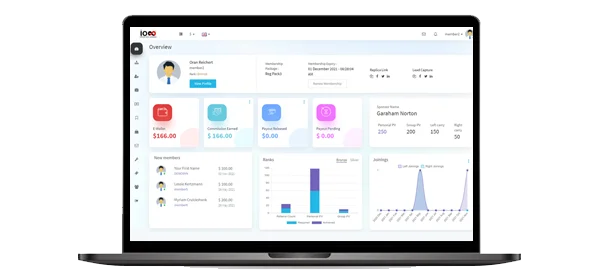
As your distributor network grows, managing genealogy, commissions, and rank qualifications manually becomes increasingly difficult. The right technology helps automate these processes, reduce errors, and improve transparency.
Reliable MLM software also saves time and allows your team to focus on growing the business instead of handling manual calculations.
Consider the following:
Accurate technology builds trust and supports a growing distributor network.
Every MLM business experiences distributor attrition over time. While recruiting new distributors is important, retaining active ones is equally essential for maintaining steady growth.
Planning only for MLM expansion can lead to unrealistic expectations. A strong retention strategy helps build a healthier and more sustainable network.
Consider the following:
Planning for distributor retention strengthens your business over the long term.
Building a successful MLM business takes time, consistent effort, and financial investment. Recruiting distributors, developing training programs, and creating repeat customer demand rarely happen overnight.
Setting realistic expectations helps your business stay focused during the early stages of growth.
Consider the following:
Businesses that prepare for the journey are better positioned to build a successful and sustainable MLM network.
Many businesses struggle not because the MLM model doesn't work, but because they launch without the right preparation.
Conclusion
Adding an MLM model to your existing business can unlock new growth opportunities, but only if your business is ready for the transition. Products, profit margins, operations, compliance, technology, and distributor support all play a role in building a successful and sustainable network.
Working through these 10 questions can help you identify your strengths, uncover areas that need improvement, and make informed decisions before investing in an MLM model.
If you've answered "yes" to most of these questions, your business could be ready for the next stage of growth. Infinite MLM Software provides everything you need to launch, manage, and scale your MLM business with confidence.
Let's make it happen. Schedule your free demo today.
FAQ
Not every business is suitable for an MLM model. Businesses with repeat-purchase products, healthy profit margins, scalable operations, and a clear growth strategy are generally better positioned to support a distributor network successfully.
Products that customers purchase regularly tend to perform best. Health supplements, skincare, cosmetics, wellness products, household essentials, and nutritional products are popular choices because they generate recurring sales and help distributors build a stable customer base.
Your margins should be able to cover manufacturing, logistics, operational costs, and multi-level commission payouts while maintaining profitability. Reviewing your cost structure before launching helps ensure your compensation plan is financially sustainable.
A compensation plan determines how distributors earn commissions and bonuses. A well-designed plan motivates distributors, rewards product sales, and supports long-term business growth without putting unnecessary financial pressure on the company.
An MLM business typically requires software that can manage distributor registrations, genealogy tracking, commission calculations, rank management, e-wallets, reporting, and secure payout processing. Automation helps improve accuracy and reduces administrative work.
Some of the most common challenges include designing a sustainable compensation plan, maintaining compliance, managing inventory, supporting distributors, and scaling operations. Addressing these areas early helps create a smoother transition.
Compliance is essential for building a legitimate and sustainable MLM business. Understanding the regulations in your target markets, prioritizing retail sales, and following direct selling guidelines can help reduce legal risks and strengthen your business reputation.
MLM software simplifies many operational tasks, including genealogy management, commission automation, distributor onboarding, reporting, and payment processing. This allows businesses to focus on growing their distributor network while ensuring accuracy, transparency, and operational efficiency.
Product Specialist & Research Head

Are you on the lookout for a cost-effective software solution with advanced features for your MLM business? Infinite MLM software might just be the thing for you.
Connect with Us